high schools, highway miles, and an MIT story waiting in rural ohio by Nicole Cooper
ft. Max B. '24
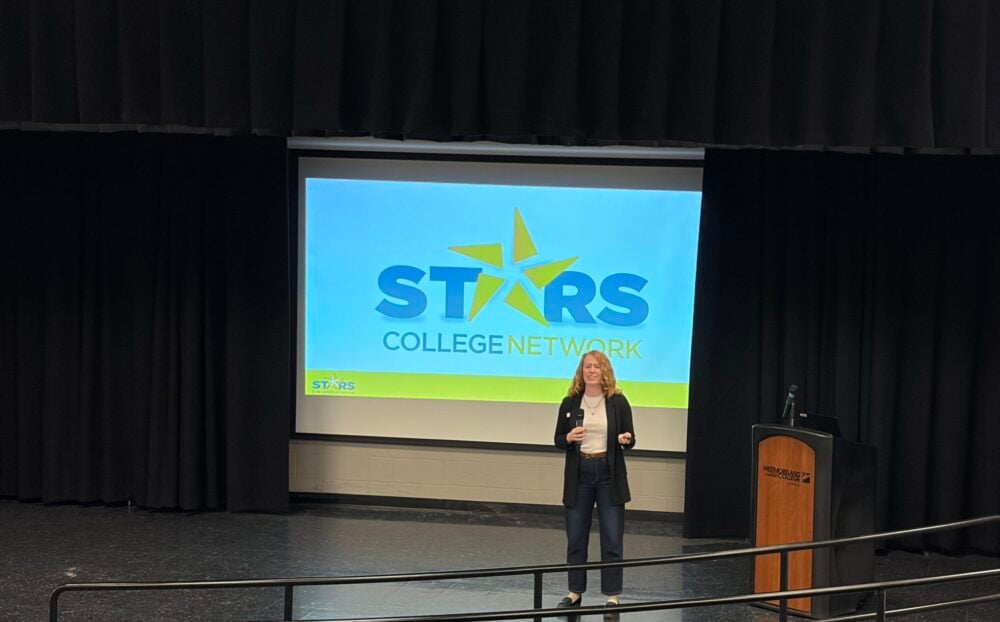
The STARS College Network begins a college fair with a 45 minute presentation on navigating the college application process! Here I am – doing my best to welcome everyone.
There are a lot of things I expect when I’m visiting high schools across rural North Appalachia during a spring recruitment trip with the STARS College Network. Long drives. Beautiful views. Laughing with 20+ partner institution admission officers due to sleep deprivation and my fantastic comedic timing. The occasional “you’re from MIT??” double take. What I don’t always expect is to hear about an MIT alum who attended the small high school we are visiting on our trip.
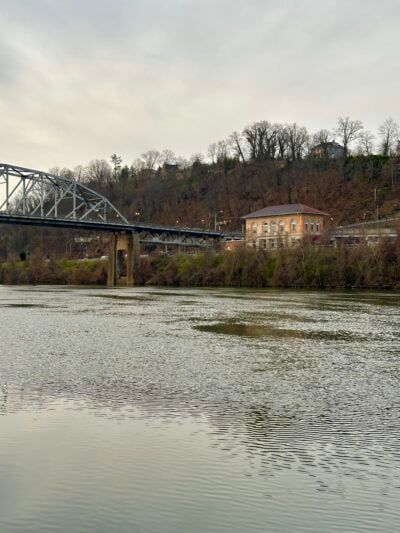
The bridge and water views are next level
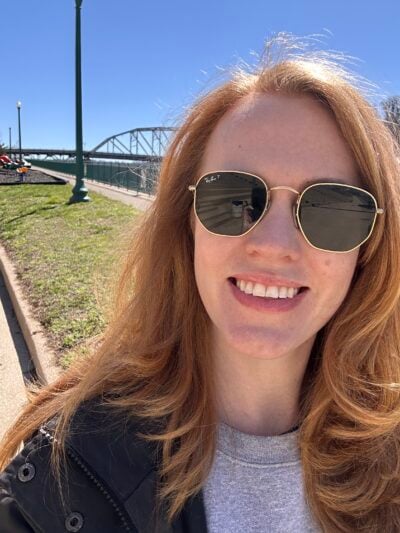
me and a bridge!
During one visit in rural Ohio (one stop on a trip through Northern Appalachia stopping southeastern Ohio, West Virginia, and parts of Pennsylvania), I was talking with a group of teachers while setting up for the college fair, about what we were doing out there (there is always time to chat with teachers and counselors before the students and families roll in). I speak with them about how we are traveling to more rural communities, meeting students where they are, trying in our own small way to make MIT (and other institutions) to feel a little less far away. These teachers were so excited sharing with me a story about a student from their high school who had gone to MIT and just recently graduated. They all spoke about him with a kind of collective pride. One teacher mentioned how excited he was to hear that we were visiting his very own high school on an outreach trip.
Naturally (or not so naturally???) I asked if anyone had his contact information.
She paused for a second, smiled a little, and said, “He’s actually my son.”
That kind of moment sticks with you.
So I did what we often encourage students to do, I followed up. I reached out, told him about the visit, and asked if he might want to share a bit about his own experience, what it was like coming to MIT from a rural background, and what those early moments felt like.
He enthusiastically agreed to chat with me! While I enjoyed our time learning about his story over zoom, I will pass it on over to him to share about his experience coming from a small-town in Ohio to MIT.
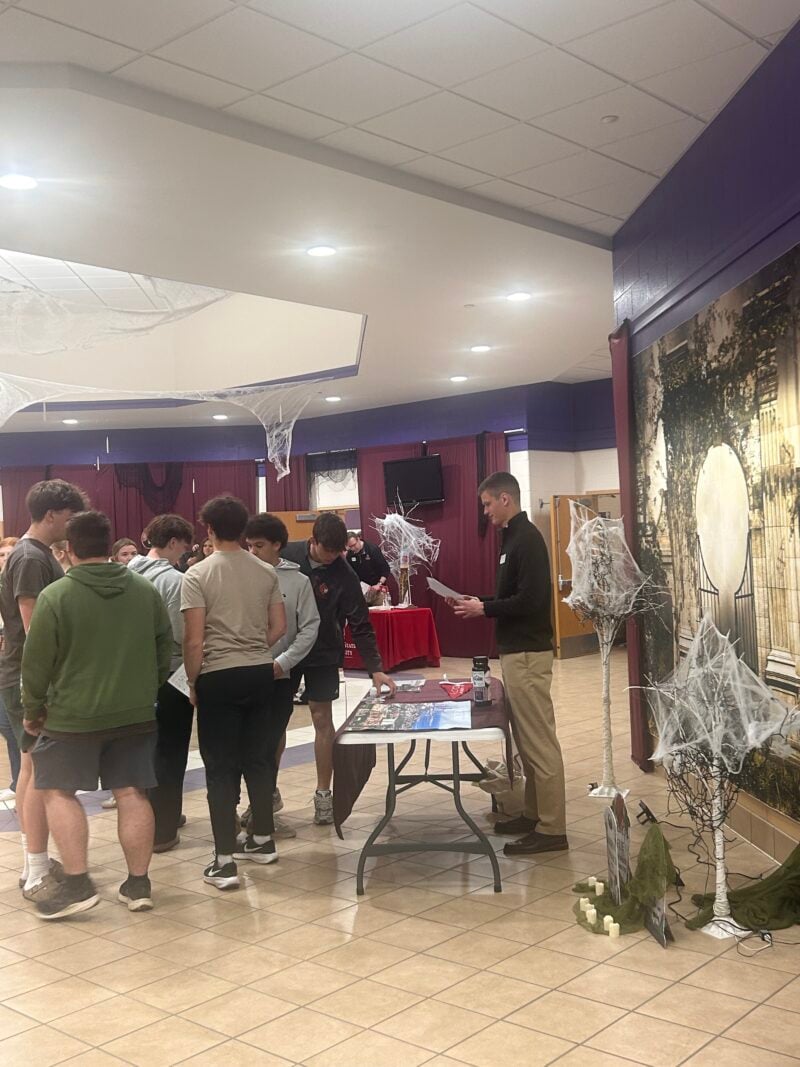
College fair at his HS!
Thanks Nicole! To get the intro out of the way: my name is Max Burns, and I majored in course 2A (mechanical engineering) with a concentration in medical devices. I graduated from MIT in 2024, and am now working on lower-limb exoskeletons at Stanford for my PhD. I grew up in Logan, a small town in southeastern Ohio, known for its natural caves and hiking trails.
Anyways! I’ve been glad to hear that there’s now an effort to increase recruitment from rural areas. For most of my life the prospect of going to a “fancy” out-of-state university wasn’t something I had considered. After all, nearly all the college-educated people that I met had attended public universities in
Ohio. When I decided to apply to MIT, I remember feeling exceedingly anxious about how I would stack up to the other applicants. I was lucky to attend a high school which had some AP classes, but I hadn’t even heard of programs like science olympiad, nor did I have high-school research experience or national accolades. I can imagine a similar experience for most students from rural districts, which just don’t have the population density or funding to support the same programs as larger urban districts. One saving grace for my anxiety was an In short, he explains that MIT doesn’t perform one calculation to determine an applicant’s “score”, and instead looks for people who are passionate and make the most of what they have access to. MIT prefers to build a community with a variety of interests and perspectives, and rural students are a key part of that vision.
When the admission results came out on 3/14, I was completely shocked. My entire vision of my possible future shifted. After the initial excitement of the admission passed, I was waiting for two crucial things: 1) The MIT silver tube! 2) My financial aid letter. As I understood it, MIT was a private school with a yearly estimated cost which would quickly exceed the price of our house, but they did offer impressive financial award packages to low-income students. When my award letter arrived, I was relieved to see that MIT would cost me around the same price as the local community college, including room and board! In fact, since I graduated, MIT further extended their financial aid coverage for low-income students, so that those with household incomes below $200k attend tuition-free. My point is: don’t let the cost of attendance stop you from applying to MIT!
The transition to MIT and the Boston area was a huge change for me, suddenly I was 700
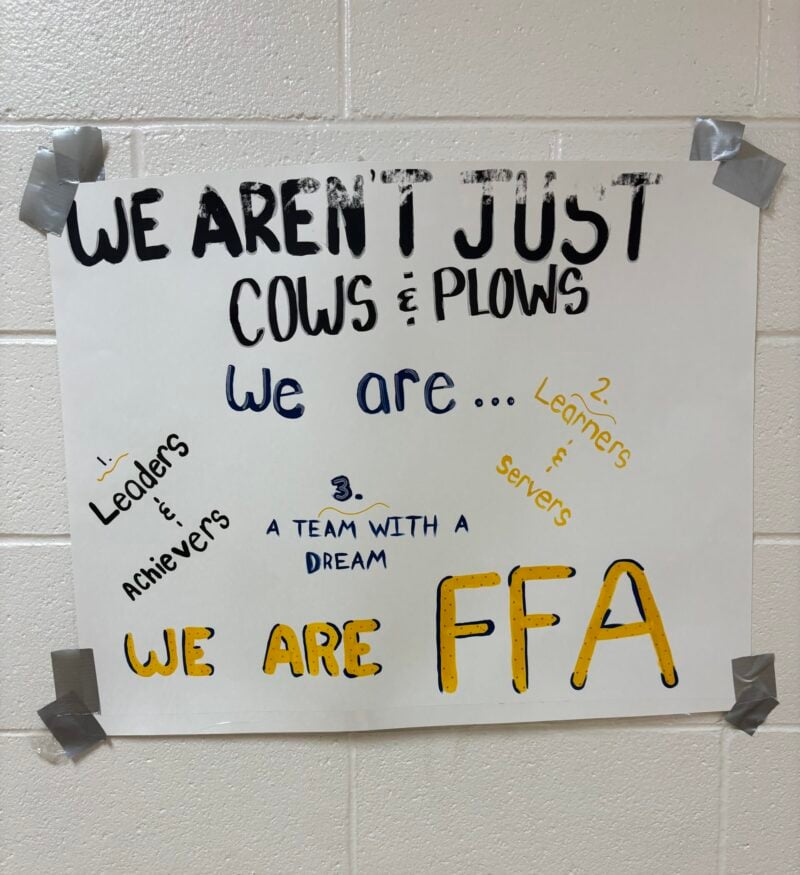
Poster from his HS – iykyk
miles away from everyone I’d ever known, in a city with actual public transport and an international airport! The most obvious difference from my small town was the number of people living in the Boston area. For the first time, I was living in a place where you could walk down the street without seeing at least three people you knew. That being said, MIT has fewer than 5,000 undergrads, and after a year on campus I found it was not so different from a small town. Pretty quickly, I couldn’t walk down the street without seeing a dozen people I knew! This is aided by the huge variety of interest groups and clubs that MIT supports, and how involved students are in these sub-communities.
One of the most interesting differences between MIT and my hometown was the exposure to so much more of the world through my classmates. Rural communities can be culturally insulated, a product of nearly everyone in the community having grown up in the same place. At MIT I made friends from across the world, many of whom were closely connected to communities or countries that I had never seen. There were plenty of times where it felt strange, like there was an entire world parallel to mine that everyone else had grown up in, but not me. I’d say the culture shock was one of the most overwhelming aspects as a rural student, but it was abated by the fact that everyone around me was so kind. If anything, the fact that everyone is from different backgrounds makes it easier to make friends across boundaries that usually wouldn’t be passable. Everyone is reset to the same playing field, and although I felt being from an isolated community meant I had more to learn, it also meant I had plenty to share! Funnily enough, most of my friends had also never interacted with communities like mine, or even been to the rural midwest (there were a lot of Iowa/Ohio mixups…). I think the key to navigating this is to make an effort to better understand the people around you, and to have the humility to change your understanding of the world.
Although there are plenty of differences between MIT students, the most common uniting theme I see is an emphasis on creating. Clubs and interest groups are the backbone of MIT’s community, regardless of your background or interest you can find other people who are passionate about the same things.
I met my closest friends through Terrasope, a first-year learning community focused on proposing and researching a solution to address an environmental problem. It involved plenty of chaos and late nights researching urban wildlife corridors, but we ended up with a pretty cool website and a life-long bond forged through shared terra-trauma (we loved it).
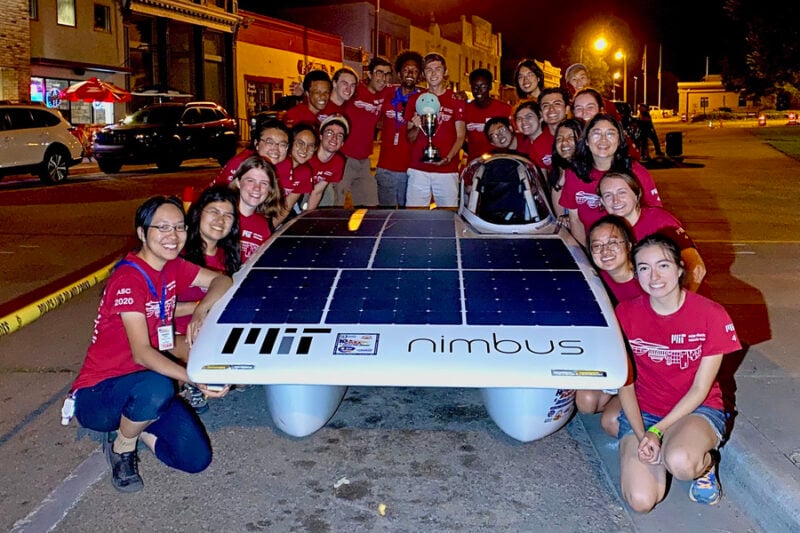
A photo of the team with our car, Nimbus, from ASC 2021, I’m in the back behind the stuffed animal!
For my first two years, I was involved in the MIT Solar Electric Vehicle Team, which builds a fully solar-powered car from scratch and races it across the country in a competition with other universities. I learned so much about working on a team with other engineers, spot-welded battery cells (terrifying, but we earned the best battery award!), and camped in the Rocky Mountains for the first time during the race.
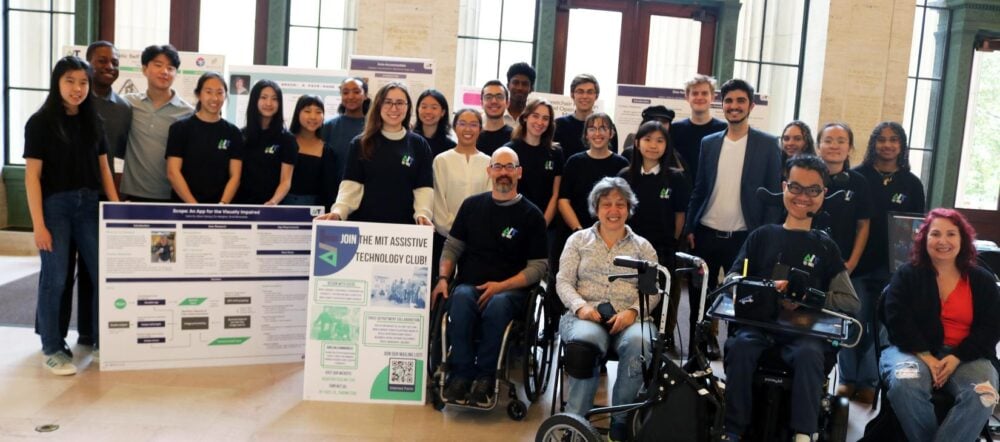
A photo from the AT Club showcase in 2023!
After I retired from the solar car team, a couple of friends and I re-established the MIT Assistive Technology Club, which pairs student teams with a codesigner who has a disability, to build a device or piece of software that the codesigner can use to improve their daily life. Starting the club and managing project teams was a lot harder for me than quietly soldering wires together, but was the work that I’m most proud of during my time at MIT. Too often, assistive devices are designed for the users, without adequately involving them in the design process. By including the codesigner at every phase of the design process as an integral part of the team, we could make prototypes suited to their exact needs.
For me, one of the best parts of MIT was wanting to make something, whether it be a car or a club for assistive devices, and being actively supported throughout the process (shoutout to the Edgerton center!). I did not come into MIT with a strong technical background in anything, I was so concerned about being behind my classmates that I frantically did Khan Academy courses the summer before my first year. But what I found was that although the MIT experience can be challenging, it provides an amazing technical basis, regardless of where you start. Don’t let fear of being behind, or the idea that you’d be too different from your classmates stop you from pursuing a place in the MIT community.
What Max shared stays with me for a lot of reasons.
Partly because his story is not unusual in the ways people might expect. Not because every student has built a solar car or started a club, but because so many of our students arrive at MIT having made the most of what was available to them, not focusing on what was missing. That’s the part that often gets lost in conversations about access or “competition.” Expanding where we recruit doesn’t lower a bar. It helps us see more clearly who has already been clearing their own.
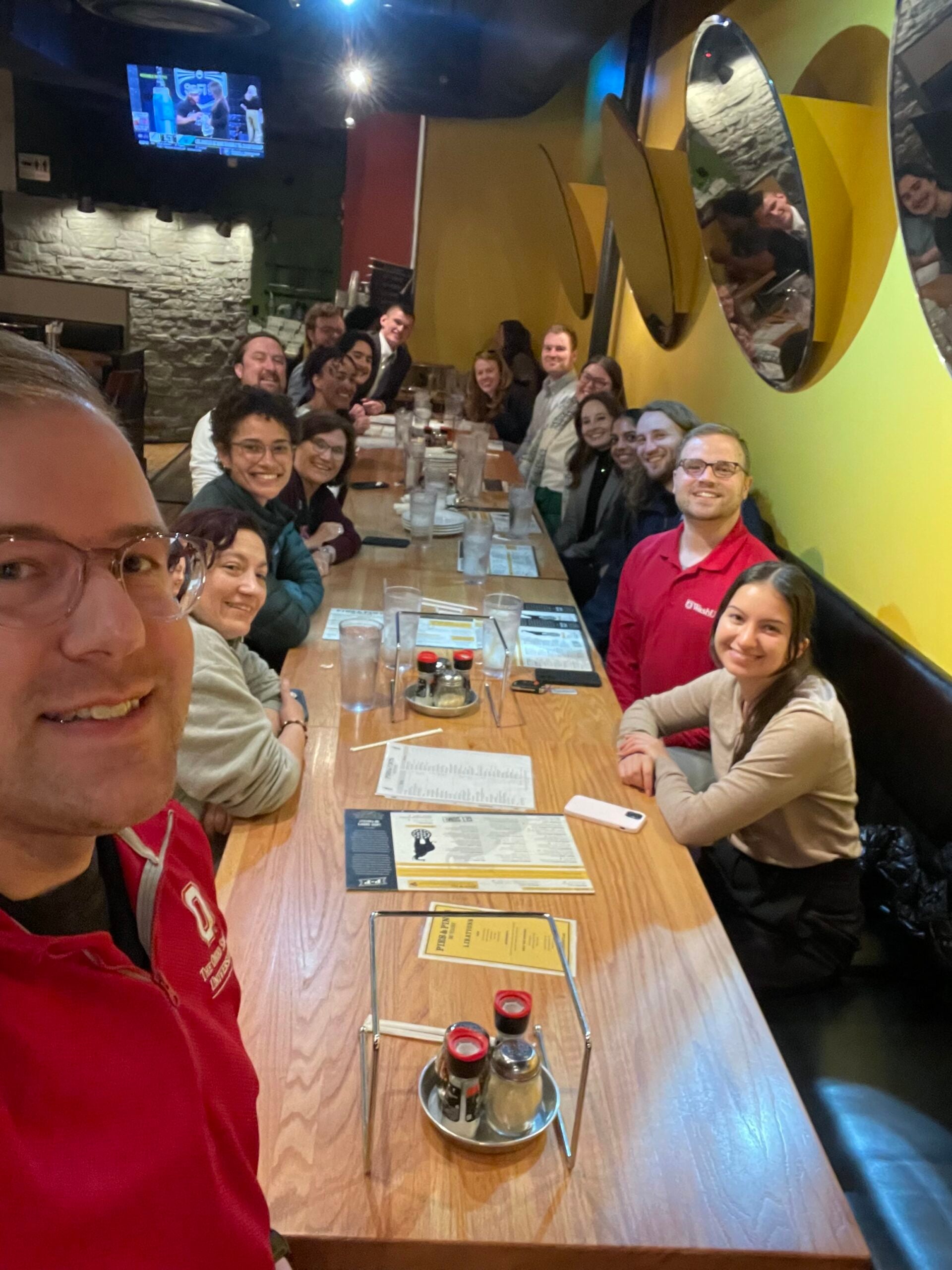
When you travel together, you all eat together! One of our many group meals on the trip!
But it also stays with me because of where it started: in a high school, in a conversation, in a moment of pride from a teacher who, it turns out, was also a parent. That kind of pride doesn’t come from prestige. It comes from watching someone grow, take a chance, and step into a world that once felt far away.
When we travel to rural communities, we’re not showing up to “discover” talent that wasn’t there before. We’re showing up to acknowledge it. To make sure students know that places like MIT are not as distant, financially or otherwise, as they might seem. And to remind educators and families that their students belong in these conversations. While we have fun on the road (trying lots of small-town restaurants, seeing new sights, and making friends along the way), its the access to higher education that brings us all together. Stories like this one.
Max’s story is one example. There are many more we haven’t heard yet.
And that’s really the point.
Because somewhere out there, maybe in a classroom like the one I visited, there’s another student who hasn’t quite pictured themselves here yet. Maybe they’re doing exactly what Max described, making the most of what’s in front of them, unsure how it all stacks up. Maybe they’re waiting for a signal that it’s even worth trying.
If that is you, consider this your signal!
>>>> More photos from the trip – a fun part of the STARS College Network is many of us hail from rural or small-town backgrounds, and while thats not a requirement, everyone in the network and on outreach trips appreciates rural spaces and looks forward to these trips year after year.
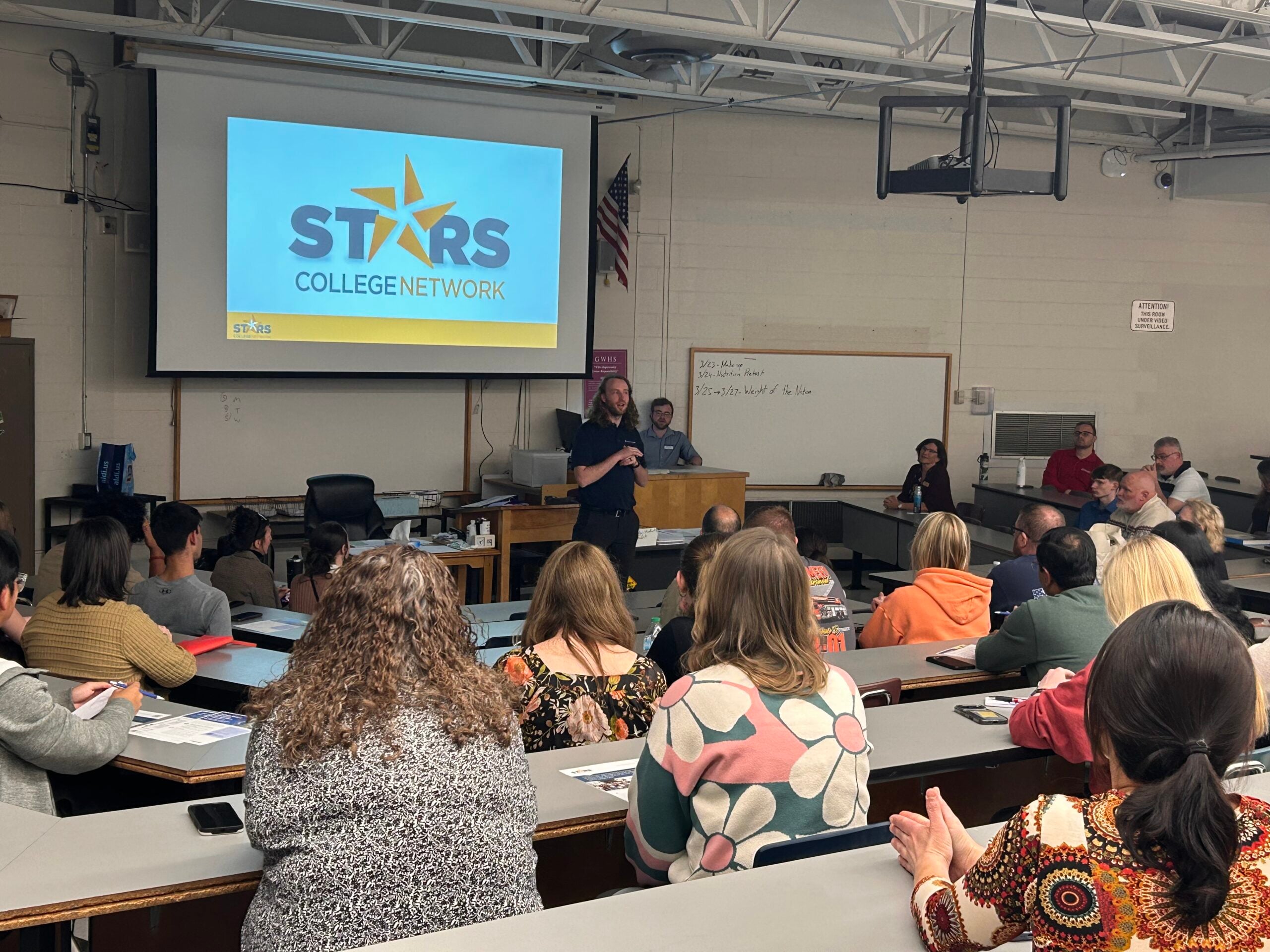
another location another presentation
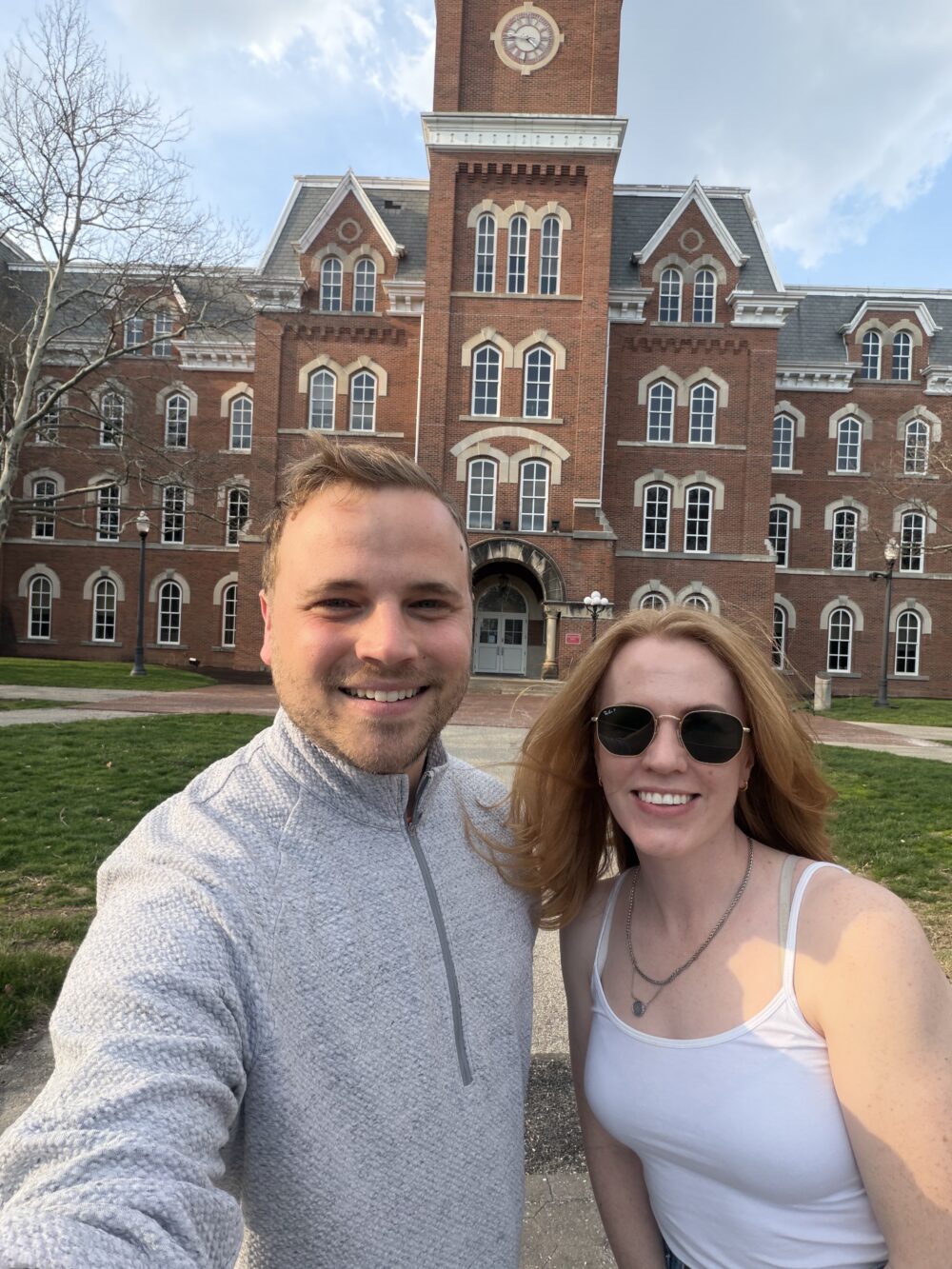
Because we are higher ed nerds, we like to visit local institutions – like The Ohio State!
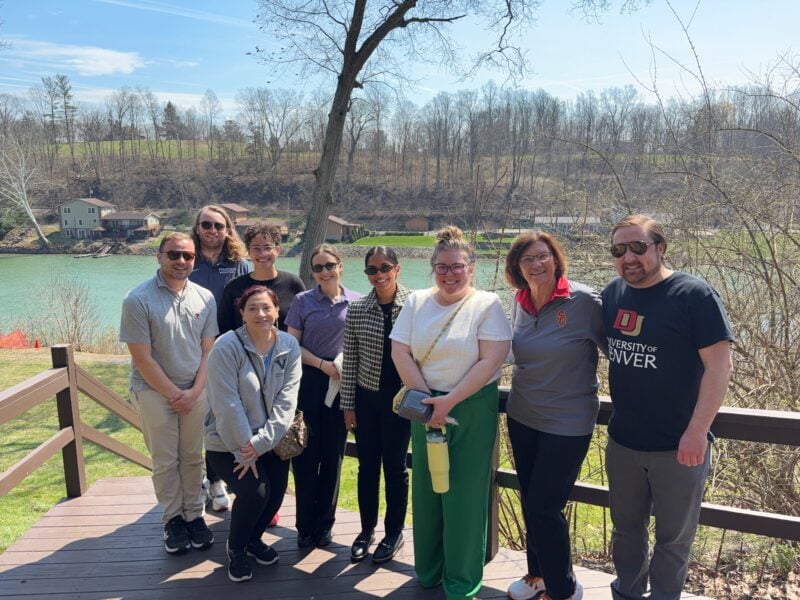
Lunch with a view with (most of) the crew
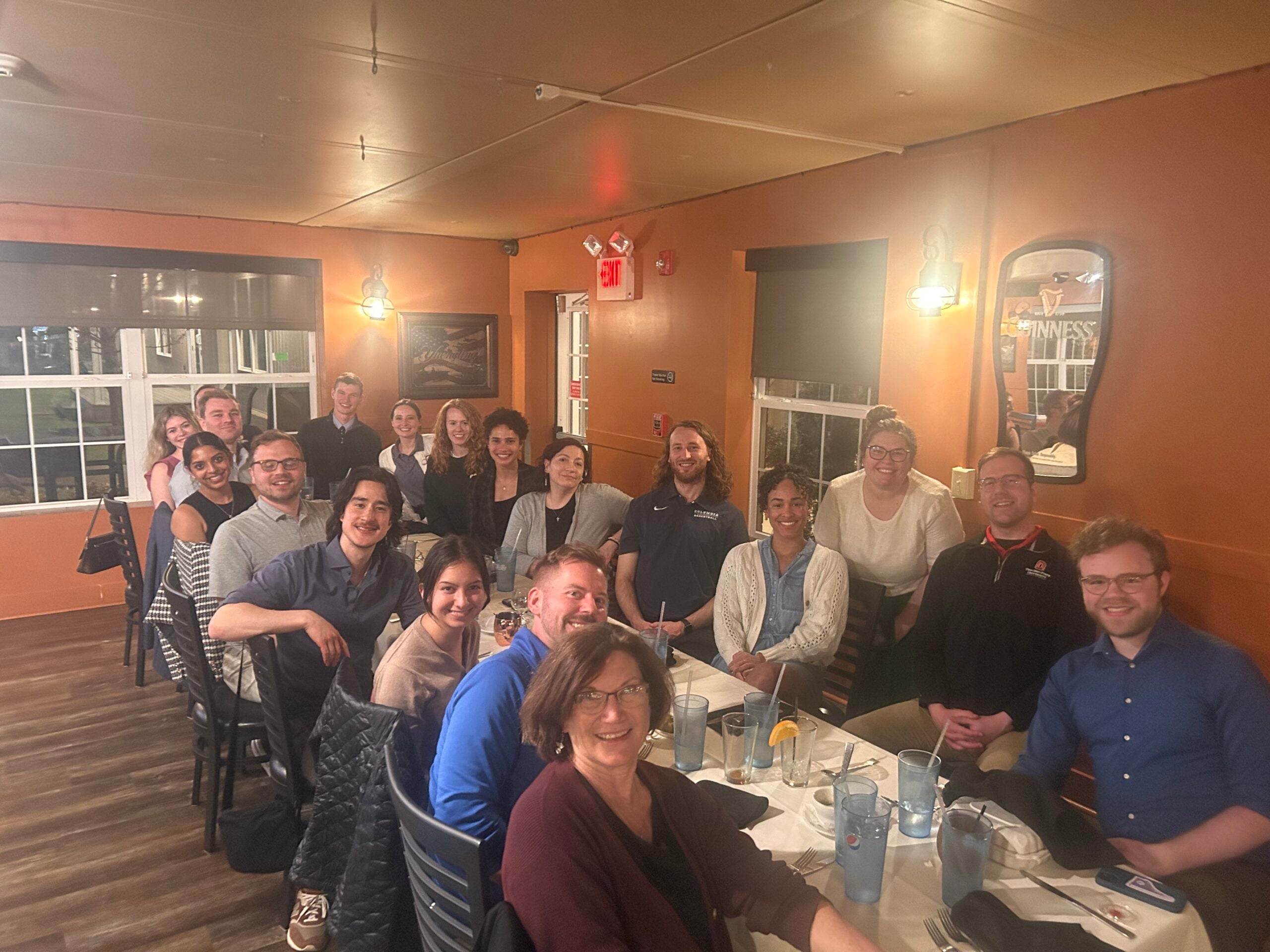
The last dinner with the group! We all drove home during a tornado warning…