
Urban Studies and Planning at MIT! by Victor D. '27
On the DUSP: Part 2
Student Profiles from the Department of Urban Studies and Planning
Urban Studies and Planning (Course 11) is a small, interdisciplinary major engaged in real-world issues. Since the posting of the last blog featuring DUSP01 Department of Urban Studies and Planning student profiles, the department introduced Course 11-6 otherwise known as Urban Science and Planning with Computer Science, which prepares students to use computational tools to make positive social impacts. If you’re curious to learn more, I asked some of my classmates to share what brought them to DUSP!
Diego Temkin ’26, Computer Science + Urban Studies and Planning

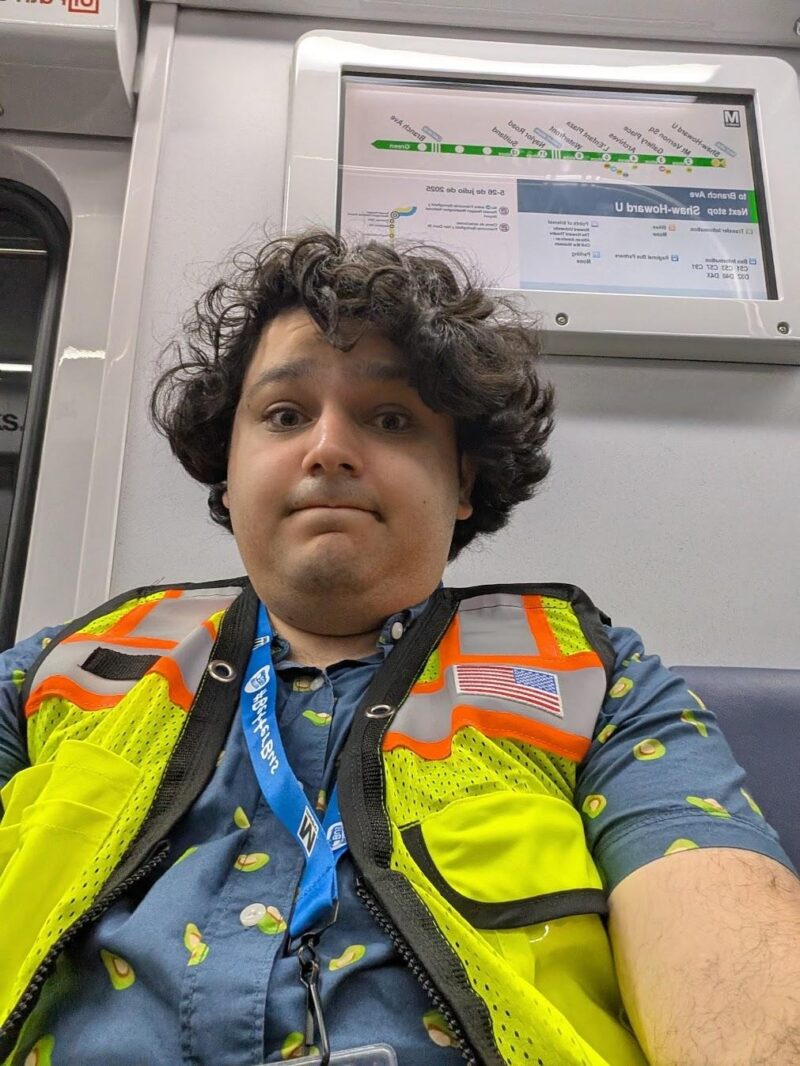
When I started at MIT, I came in as an 18-C.02 Mathematics and Computer Science I had always liked the idea of combining computer science with ✨ something else ✨ to solve problems, but it has always been very… abstract. After bouncing around for a while, I’m now a double in 6-303 Computer Science and Engineering and 11,04 Urban Studies and Planning hoping to bring a data-driven skillset to solve the complex problems that’s inherent in planning.
In particular, my main interest is in transportation, particularly in the complex networks and systems that underly our built infrastructure. This means I end up taking a lot of classes with Course 1 (CEE),05 civil and environmental engineering and will be writing my UG thesis on computational urban bus network redesigns (but have done work in nature-based solutions, work zone data exchange, modelling specifications, and more). To me, DUSP encompasses so many different fields that all intersect, from housing to real estate to law to transportation, so seeing how these problems are all interconnected has been really fun for me over the years :)
Greta Lawler ’27, Urban Studies and Planning

Like many, I found my way to DUSP on the later side. While I’d considered Course 11 earlier in my MIT career, I spent my first two years in the world of Course 3 (Materials Science and Engineering) before switching to Course 11 as my primary major this past fall. I’ve always been interested in the intersections between technology and social issues, especially in relation to sustainability. I chose Materials Science because I wanted a strong scientific foundation for understanding novel climate technologies. However, I consistently felt drawn to the question of how these technologies are implemented in real social and political contexts. I realized I wanted to learn to think like a planner. In the same way Course 3 reveals the underlying principles behind materials, Course 11 reveals the underlying principles that shape our social systems–and how to design them to be more efficient, equitable, and sustainable.
Joining DUSP has expanded my world and exposed me to a thousand more questions than the ones I came in looking for answers to. My professors and classmates have introduced me to the connections between my interests and many other aspects of planning including geospatial tools, economic theory, data analysis for the public good, housing policy, and community development. I believe there’s no better place than MIT DUSP if you want to figure out how to make the world work better. There is a path for every set of skills and interests and you’ll be surrounded by an inspiring group of people deeply committed to serving and improving communities of all kinds.
Esther Magbagbeola ’27, Urban Science and Planning with Computer Science

In high school, computer science felt like a guiding torch while urban planning was a background presence. Researching historical artifacts and cartography as a library volunteer after hackathon practice was part of my weekly routine. Starting at MIT, I knew course 11-6 (Urban Planning with Computer Science) was a conceptually perfect major for me. Yet after hearing my desired study, I regularly got a confused look with the question, “How does that connect?” After immersing myself in classes like 11.188 Introduction to Spatial Analysis and GIS06 Geographic Information Systems and 11.540 Urban Transportation Planning and Policy, I believe my passion in these fields are infused with each other. A sophomore UROP07 Undergraduate Research Opportunities Program opportunity let me explore how bike infrastructure and safety could be estimated with data analysis and community perspective.
What excites me about urban planning is its necessity to balance technical knowledge and social understanding to bring forth productive development. DUSP consistently embeds this trivial principle with its professional support, ample research opportunities and inviting faculty. As I plan to specialize in transit-oriented development, I’m rest assured DUSP has space for my mixed interests to thrive and cultivate for my career.
Kahlen Wheaton ’27, Urban Studies and Planning
- Department of Urban Studies and Planning back to text ↑
- Mathematics and Computer Science back to text ↑
- Computer Science and Engineering back to text ↑
- Urban Studies and Planning back to text ↑
- civil and environmental engineering back to text ↑
- Geographic Information Systems back to text ↑
- Undergraduate Research Opportunities Program back to text ↑
- Urban Studies and Planning back to text ↑