
The Holy Grail of Hacks Returns by Ellie F. '28
and everything it took to get there
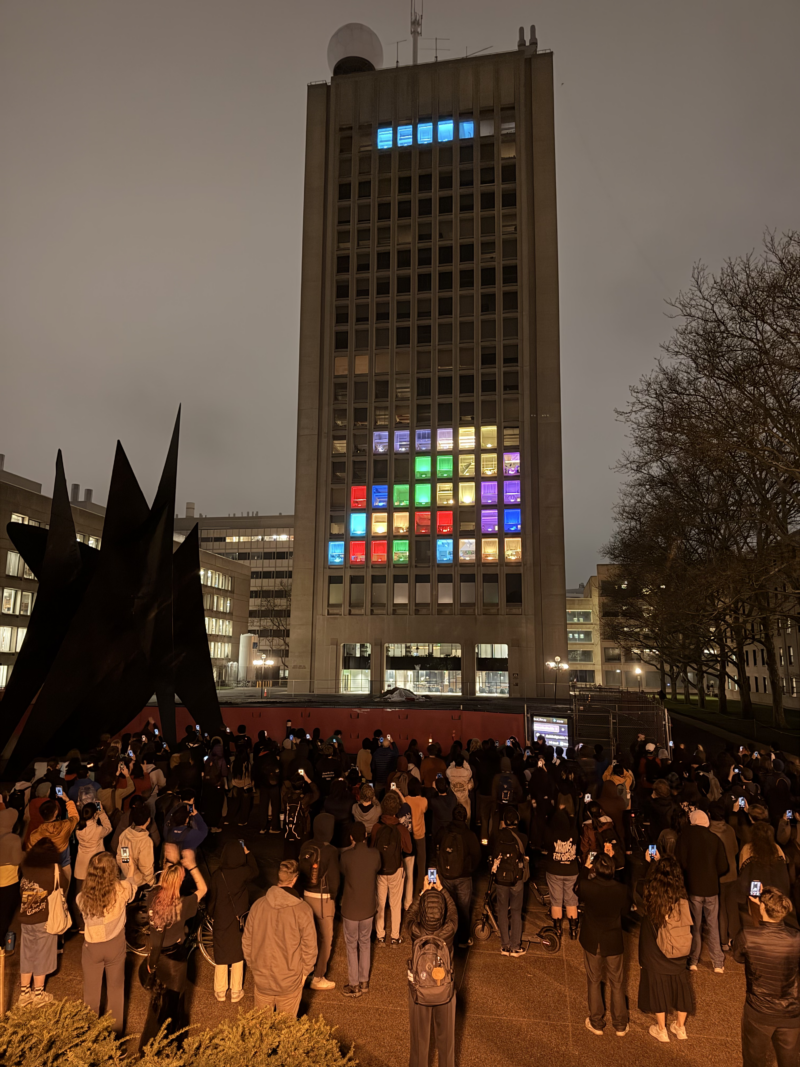
It’s nearing 10 PM on the last night of CPW,01 Campus Preview Weekend and a crowd is gathering in front of the Green Building. This is far from an official event, but the word has clearly spread like wildfire—students, prefrosh, alumni, and staff alike are piling in, tilting their heads up to stare at the dark facade and murmuring amongst themselves.
Just a few minutes past ten, the hackers, who will of course remain anonymous, lead the masses in a countdown. When they hit zero, the entire building lights up in a bright white as the opening of Bad Apple plays. It’s clear when the realization sets—just a few bars in, you start to hear gasps and delighted laughter.
But Bad Apple is just a brief appetizer for what’s ahead. The star of the show is, of course, the giant, playable game of Tetris now lighting up the Green Building. One of MIT’s most legendary hacks has finally, after over a decade, returned.

A brief history of Tetris on the Green Building
When I sat down to talk to the hackers behind the massive project, I learned that putting Tetris on the Green Building has “been on hackers’ minds since forever.” Back in 1993, the hack was listed on a spoof calendar distributed by hackers to happen on April 24th. While it didn’t come to pass in 1993, the hackers did make sure to run Tetris for April 24th, 2026.
The hackers explained that the distinctly Tetris-suited proportions and high visibility of the Green Building contribute to its nickname as the Holy Grail of Hacks. This Holy Grail had been achieved once before in 2012, and while the lights were left up for future hacks, they eventually started breaking down. “By 2018, basically everything was dead,” one hacker noted.


This time around, the hackers wanted to make everything better, more robust, and longer lasting. Talks of reviving Tetris started floating around at the end of the 2025 school year, spurred on by the end of construction in front of the Green Building. “We thought they would reopen the Dot,” said one hacker, referring to the large circular greenspace in front of the building, a perfect place to admire Tetris from. The Dot never did reopen, sitting as a fenced-off lot of gravel even today, but the hackers didn’t let that stop them. They set their goal to finish Tetris by CPW 2026, the same time the 2012 iteration had lit up.
Tetris Begins
Work on the project began in November of 2025. The hackers consulted the team that built the original hack, getting advice and learning about the problems they faced. For example, the original LED modules had an open face, and the hackers theorized that moisture from the air would condense on the cold windows and drip inside the modules, which degraded the electronics. So, the hackers made sure to design fitted 3D printed pieces with rubber gaskets to keep the new modules, which were redesigned from the ground up, completely water-tight.
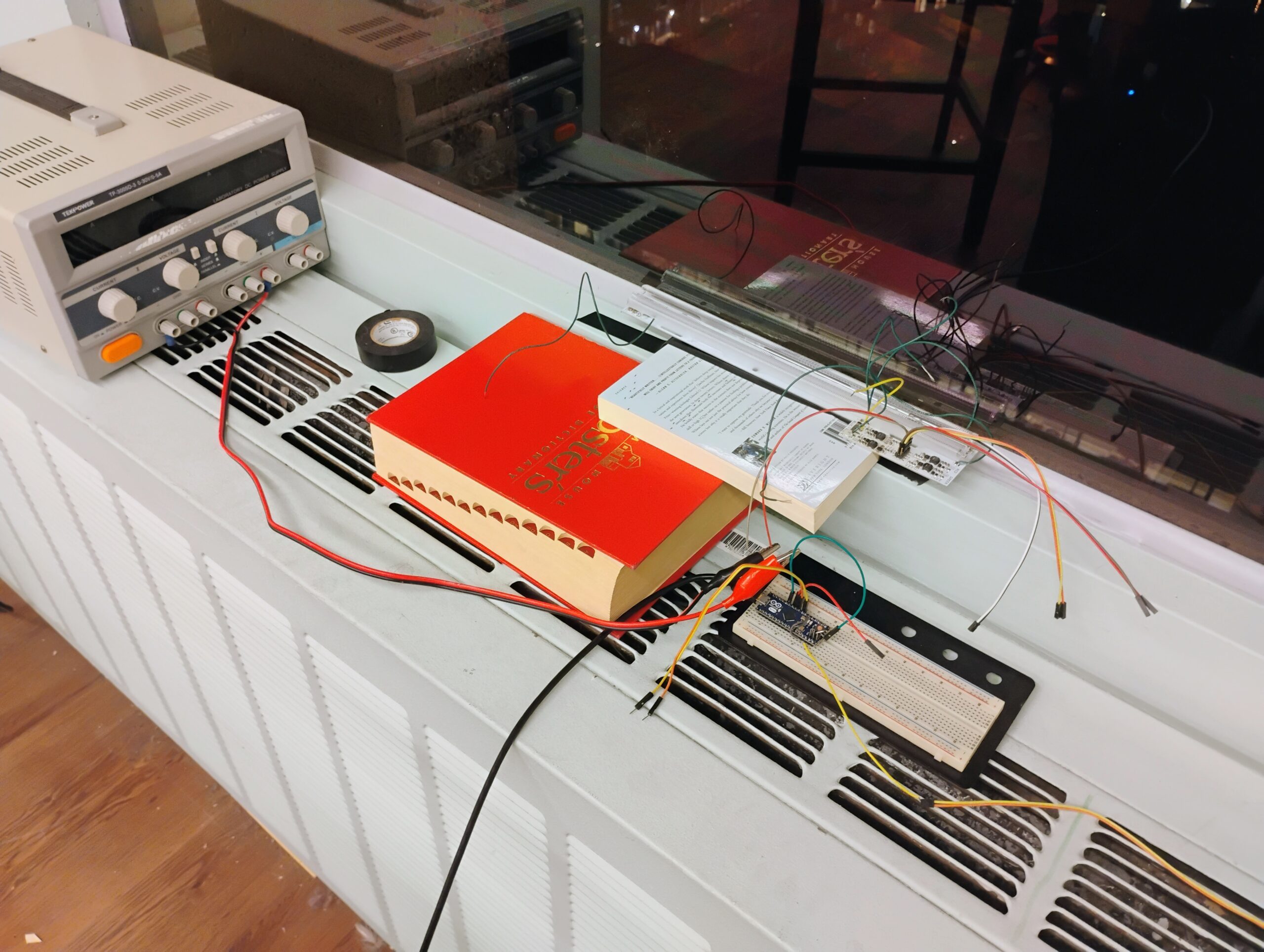
After making the first LED prototype, the hackers took it up to the Green Building, testing its brightness from windows with and without curtains drawn, looking for light spillage, seeing how distinctly the colors appeared. By the end of November, the overall architecture of the modules was laid out.
The very first LED test
Designing the hardware ran through December. To ensure the robustness of their enclosure, the hackers eventually created six major iterations of their designs in CAD software, which included heat sinks to prevent modules from overheating and a path for the power cord. During this time, two circuit boards were also designed—one to hold the LEDs, and one for the microcontroller and power supply.
By the time the hackers left for winter break, they were ready to order parts for their prototypes. They came back to IAP, which was “lots and lots of testing and iterations.” Over the month-long period, they built four physical prototypes of the enclosure, four iterations of the microcontroller, and two iterations of the LED board to make sure everything was perfect for the finalized design. By the end of January, they had ordered parts wholesale for the final module. For redundancy’s sake, though there were only 153 windows to light up for the 17×9 grid, they bought enough to make 180 modules.


The parts slowly came in over the course of February, and in March, the last of the hardware was finalized. The hackers worked on the pieces of the module they’d have to make in-house, 3D printing parts of their enclosures in the East Campus and Morningside Academy of Design makerspaces. These two makerspaces ended up being crucial to the project, and the hackers “wanted to shout them out especially.” In total, there were almost 200 hours of 3D printing needed. Over spring break, they focused on finishing the software, building 20 units for testing purposes.


The Final Push
After spring break, the team hard-pivoted to mass production. With 2.5 weeks left until CPW, there was still a lot of work to be done. They completely took over the East Campus makerspace and created a giant spreadsheet for people to sign up for mass assembly. Production ran from noon to 5 am every day, with three to nine people at work at any given time. In total, about thirty people helped assemble the modules. This came with its fair share of challenges. “When mass producing, one minute of work really compiles,” said one hacker, and the balance they had to strike between efficiency and reliability was a fine one. “It was a unique problem,” said another hacker, describing how most projects they had worked on before were one-off builds that they could devote a lot of time to building and fixing, rather than 180 units that needed to work with minimal time put in.


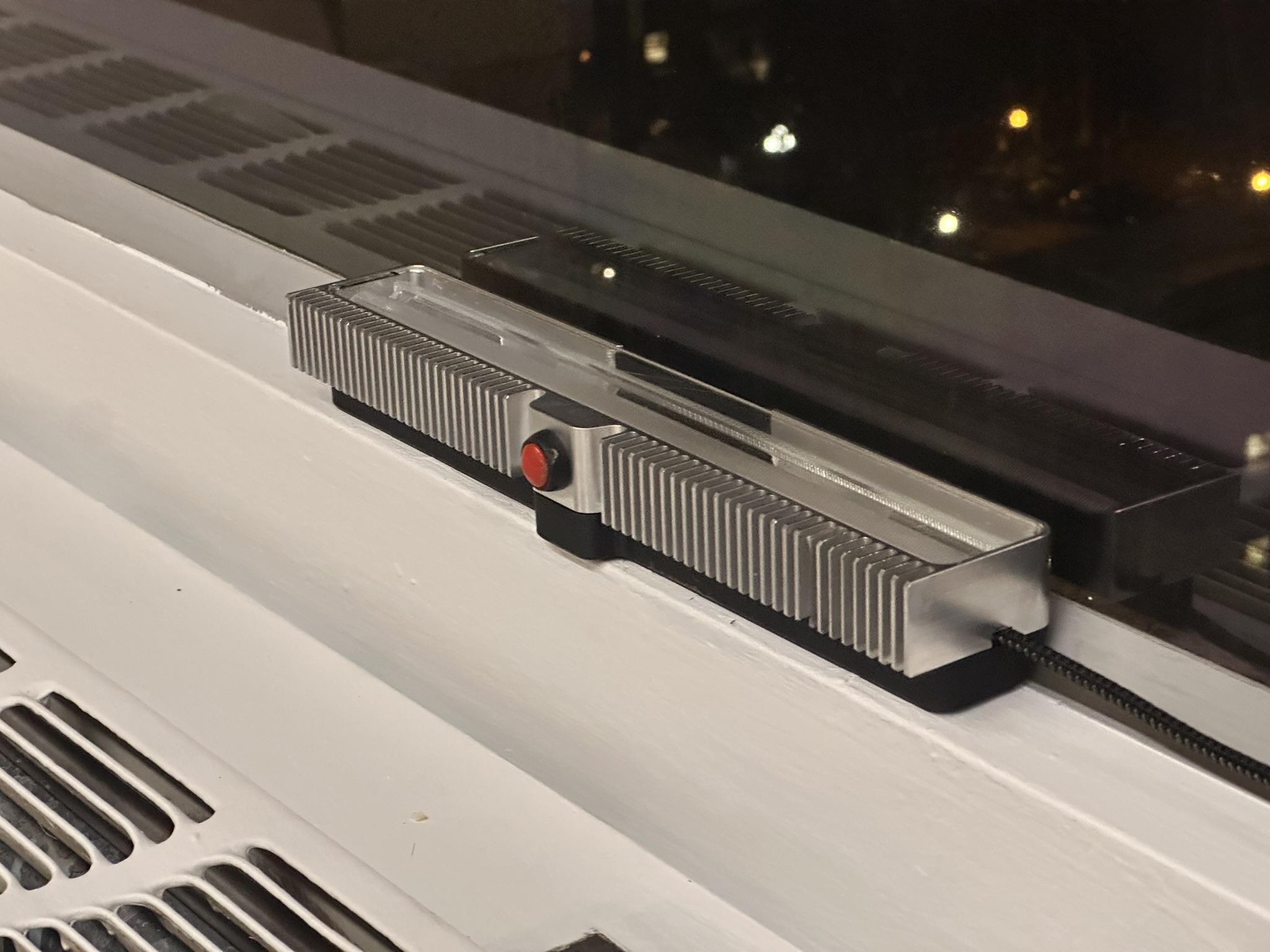
By the end of production and testing in the EC makerspace, only 155 of the 180 modules worked, and with 153 units needed to fill the windows of the Green Building, the margin was dangerously low. The hackers got to fixing and emerged with ten working spares. Then, it was time for installation. Prior to installation, the hackers had sent an email out to the Earth, Atmospheric & Planetary Sciences (EAPS) department, which the Green Building houses, notifying them of their plans. “Everyone I spoke to was so excited,” said one hacker. “Some of the EAPS people were there for the first Tetris and had wanted to see it get put back.” The team even got emails of congratulations from members of EAPS. Despite the overwhelming positive feedback, the hackers still made sure to be as thoughtful and non-intrusive as possible. Each module was designed with a large red snooze button that would turn off the light for an hour for anyone who was working late. Additionally, since the module used an outlet for power, each room was also equipped with a 3-way outlet splitter for a net gain of one outlet. Lastly, a thank-you note from the team was left in each room.
An installed module
Installation was finished three days before the big event, with just enough time for testing. And then, it was Saturday, April 18th, and a crowd was forming. Tetris ended up running for four hours, as dozens upon dozens of people tried their hand at the largest Tetris they had ever seen. All the while, hundreds showed up to watch. Cheers went up whenever a Tetris was cleared, and good-natured laughter rang whenever a player made a mistake. People walked into Boston to see the effect of the hack on the skyline and were stunned at how clearly it showed. The air was filled with awe, excitement, and curiosity. It felt like the best parts of MIT were alive, physical, and lighting up the night sky.
The Nitty-Gritty Details
A project this big has its huge share of logistics. There was the amount of people, the sheer scale of the matter, the long timescale it ran on. The project cost $30k, far above its expected cost, and was mostly funded by generous alumni donations and sponsors. Tariffs likely added thousands to the cost. When I asked about spreadsheets, the hackers immediately reacted with laughter about the complexity of their system. One hacker mentioned “the big scary one that kept track of all the expenses,” consisting of 11 tabs to keep track of. In total, there were ten different spreadsheets, a huge Google Drive, and countless group chats of various permutations of the core team. The team also estimated that, altogether, the project took over two thousand man-hours to complete.
I’ll now quote two of the hackers for technical details. The quotes are slightly edited for clarity and to remove repeated information. The first discusses the enclosure:
The design challenge with the enclosure involved managing the large heat output of the LEDs and good RF performance while maintaining physical robustness and a water-tight seal. With the project design requirement set at a lifespan of 10 years and an aggressive timeline, managing part count, assembly time and long-term decay (like UV damage from sunlight through windows) were also large concerns.
The final enclosure uses a billet-machined main section which protects the LED PCB under a glass lens. The underside houses the STM32 PCB and a curved pathway providing strain relief for the power cable, leaving the front side for heatsinks and a snooze button. A 3D-printed bottom completes the unit with a custom silicone gasket for a water-tight seal. Printed housings were made in-house, and we were able to source machined enclosures from a local machinist, while the glass, PCBs, and buttons were sourced internationally.
The second describes the electronics:
The LEDs are driven by our custom boost converter and constant current driver circuit on a single layer aluminum substrate board. The LEDS were densely packed into a thin line to sit under a single monolithic linear lens optimized for wall grazing. An onboard temperature sensor allows us to reduce the power if the LEDs start to overheat (via direct measurement), and we also simulated a thermal model of the aluminum casing to reduce brightness and prevent it from getting too hot to touch. All told there are about 65W of LEDs, and the individual brightness of each color was tuned to give the most neutral white at full power. A separate board houses the STM32WL33 microcontroller with built-in ISM-band error correcting FSK radio and 128-bit AES coprocessor which we use to authenticate all radio transmissions. Alongside it is a USB PD negotiation chip which enables us to use a wide variety of USB C power supplies and an NFC tag that allows us to easily write the window id to a new module without having to open it up (and break the waterproof seal) in the event we need to replace one.
And a few more details I was curious to know about: The Green Building screen can run at 30 frames per second. Each module takes in about 60 Watts of power and emits 30 Watts as light. That means that when they tested every module at the same time in the EC makerspace, they were using about 10 kilowatts, which somehow did not trip anything. The microcontroller was programmed in C, and the code that displayed Tetris was programmed in Python. “We wanted to make it super accessible,” said the hackers, pointing out how Python seemed to be the most well-known language here on campus.


What the future brings
With so much thought put into the robustness of the modules, the hackers hope that the project lives well into the future. “Ideally it will last years beyond our graduation,” a hacker told me. Building on to their vision of accessibility, the hackers have made sure the display generalizes from Tetris. Programming it to show images and play videos is already easy, and apart from the big Tetris show at CPW, they’ve also shown images for the Boston Marathon, Earth Day, and Officer Sean Collier’s ribbon, in a callback to a similar display made by the first group of Tetris hackers.


At this point the conversation started derailing a bit. I wondered if the team was good at Tetris. “Nope!” was the resounding answer, but it was quickly amended by “actually, some of the team is good at Tetris.” Just not the hackers in the room with me. I also asked if it could run Doom. Turns out, they’ve already tried! “It just looks terrible because of the low resolution,” said one hacker, “but if someone can make Doom that runs on a 17×9 grid we will put it on.” While musing about the unique aspect ratio of the Green Building, we suddenly thought of running Subway Surfers. This was a highly controversial and debated proposal.
After our interview, we went out to the building itself, where I got my own chance to be bad at Tetris where all of Boston could see me. A small group was gathered, composed of old friends, new friends, and strangers, and we chatted peacefully as we watched the Tetris pieces glowing above us. Green Building Tetris, the Holy Grail, was a feat of engineering, design, and logistics, but it was also the 277-foot-tall symbol of community, teamwork, and the joy of creating. And what better way is there to fully embody the spirit of MIT?
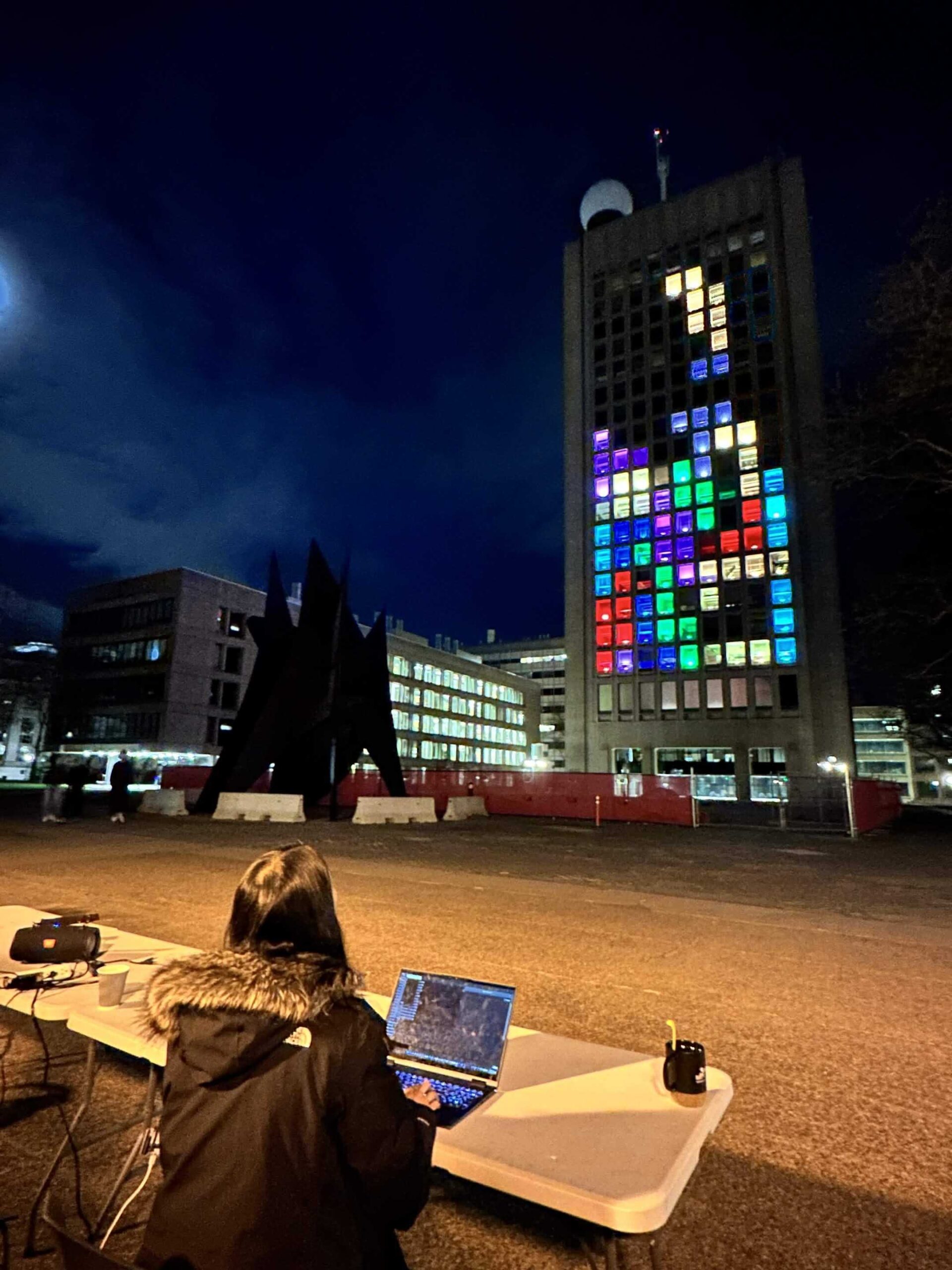
Thank you so much to the hackers for making Tetris and this blog possible, as well as for giving me the opportunity to fail Tetris on the Green Buildling. It was an honor.
- Campus Preview Weekend back to text ↑