
bike lane etiquette by Caleb M. '27
and DON'T WALK IN THE BIKE LANE.
Boston is a wonderful city with many beautiful, interesting features that makes living here a new experience every day. One of those things is biking infrastructure: with bike lanes along most roads, Bluebike stops accessible from anywhere in the city, and bike lights at traffic stops, my Texan mind could barely comprehend using anything but a car to get around the city when I first moved to Cambridge.
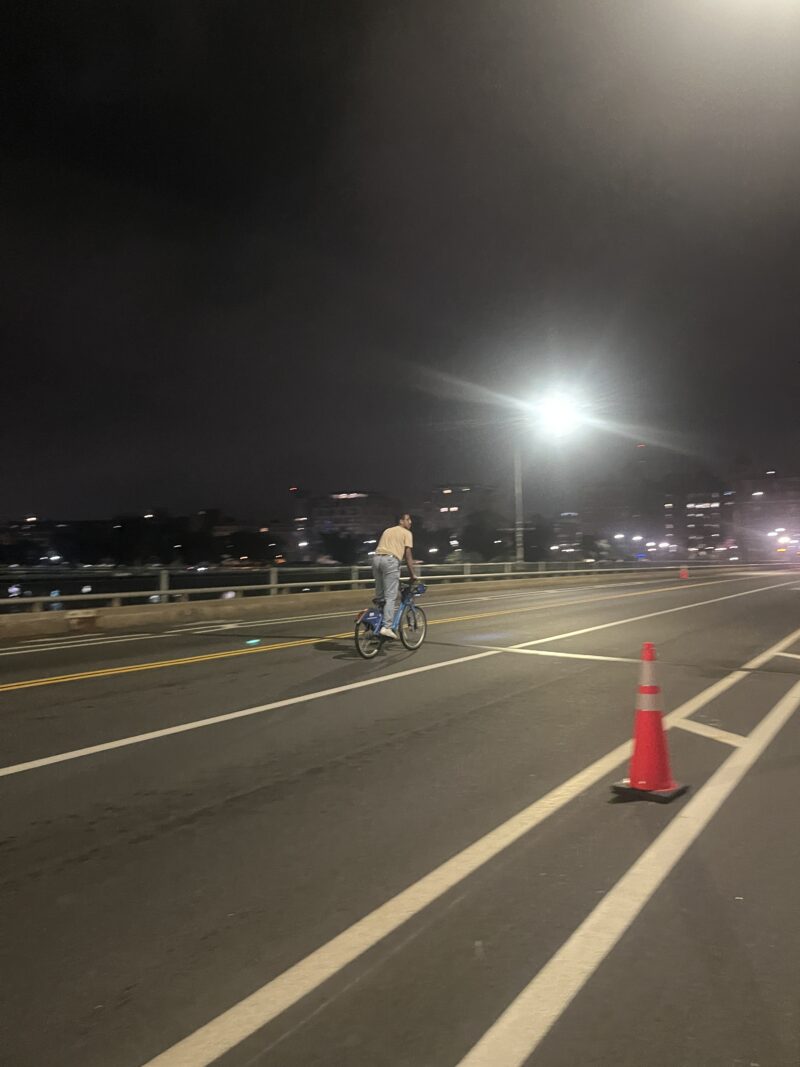
Three years have passed since then, and in that time I have become something of a self-proclaimed master of Bostonian Biking. My BlueBikes account has counted nearly 1,200 rides and 150 hours in the past 3 years, and I do not intend to slow down. I bike to and from class, rehearsals, parties, events, and anything in between. I bike to work out, to explore, to commute, to romanticize my life (I’ve got a whole playlist dedicated to just that), with a backpack, in a suit, in the rain and snow and shine. I absolutely love biking in Boston.


I’ll take a moment here to bring up one of the most important and useful resources we’ve got in the biking endeavor: The MIT Subsidized BlueBikes Membership. If you’re new to the city, BlueBikes is a public biking service operated by the MBTA. You can check out a bike at any stop in the city, ride it to your destination, and then drop it off at any other stop once you’ve arrived! There are nearly 600 stops around the Boston area, and I find them super convenient for getting around anywhere in the city. The BlueBikes annual membership costs around $150 for unlimited 45-minute rides on classic bikes and $0.10/minute on the electric bikes, but MIT subsidizes the membership to cost only $50 for all students, staffm and affiliates. I’ve purchased it for the past 3 years and intend to continue for every year that I remain a part of the MIT ecosystem. I absolutely recommend! 01 I think there is something wrong with the code on the MIT page linked above, as my friend tried to use it recently and was unable to. I think the code is just outdated and should be updated soon. If that changes, I'll edit this note.
All that being said, I know many of the people reading this will be coming to Boston from cities that may not have such an extensive biking architecture in the coming weeks. As you prepare for your next few years here in Boston, or if you already live here and you have yet to learn these lessons (which is all too common), I’d like to share a brief lesson with you all: bike lane etiquette. By reading this lesson, I am saving you from having to learn these things the hard way (aka me literally yelling at you in the street as I bike past, or worse, you getting hit by a bike). Hopefully this briefing can make all of our lives a little bit easier!
If you’re new to Boston, an understandable thought here might be: Caleb, what is a bike lane? Great question! A bike lane is, as the name suggests, a lane that is reserved for bikers to use to get around cities. They are marked with a bike and an arrow in the direction that direction is expected to use them. There are several different kinds of bike lanes, here detailed by the City of Boston:

Much of this advice, especially pedestrian-oriented, is in reference to Full-Build bike lanes, which are very common around campus and Cambridge. However, it is applicable to all kinds of bike lanes.
Note that this is not legal advice. These guidelines are derived from my experience in the Boston Area as a biker and a pedestrian and, while I have referenced the region’s laws to ensure that I am not misleading anyone, it is once again derivative of my experience and those of my peers and other Boston area residents.
With that, let’s begin the lesson!
If you are a PEDESTRIAN:
- DON’T WALK IN THE BIKE LANE. This is by far the most important lesson in this entire blog and is the motivation for me writing it in the first place. The bike lane is called the bike lane because it is for bikers to bike on. The entire sidewalk is right there, so please use it. The bike lane is too often used as a runway, and that is not what it was made for. Even if you do not see a biker in front of you, they could always be behind you. There are few things as frustrating to a biker as someone walking in the bike lane. If I find you doing so, I will ring my bell at you until you move, recite this line to you, and then bike away.
- And, on top of that, please do not STAND in the bike lane. If you can stand in the bike lane, you can stand on the sidewalk.
- If you missed point 1 and somehow find yourself in the bike lane and you encounter a biker or hear the ring of a bell, just get out of the bike lane. Please don’t argue or yell at the biker because they are probably already gone. It is illegal to bike on the sidewalk in certain regions or to e-bike on any sidewalk in Boston, and even if it is allowed it is highly discouraged, so besides the road, the bike lane is the only option.
- If you are crossing a bike lane, such as to proceed to cross the street, look both ways to ensure that there is not a biker nearby to avoid a collision.
If you are a BIKER:
- Respect and use the bike lane. Don’t drive in the sidewalk unless it’s absolutely necessary, because then everyone’s life just gets harder. A lack of a separated bike lane is the only good reason to bike in the road if it is daytime or there are cars in that road, so adhere to it as much as you can. It’s there just for you!
- Bike on the appropriate side of the road. You should be biking in the same direction as traffic, usually on the right side of the road. Separated bike lanes are always one-way and are marked with a biker and an arrow to distinguish which direction to be moving in. There is no good reason to be in the wrong bike lane.
- If, for whatever reason, you need to be in the other bike lane and you see a bike coming towards you in the right direction, then the other biker has the right of way, and you should yield to let them pass. The biker going the right way has the right of way. Also, try to stay to the side of the lane to make passing easier.
- If passing another biker, ring your bell to alert them that you’re behind them if the path to pass is not clear, optionally say “on your left/right” so as to not surprise them when appearing, wait for them to make some room in the lane, and then pass efficiently while leaving sufficient space between the two of you to not be dangerous.
- If being passed by another biker, when you hear a bell ring, edge to the side of the lane if possible to allow the other biker to pass.
If you are a DRIVER:
- Please don’t hit me.
- In particular, please watch for bikers when turning both left and right. I’ve gotten into too many scary situations because I was crossing an intersection where I had the right-of-way and a driver turned on a yielding left light without watching for bikers and almost ran into me. When making a turn, a quick check across the street to see if a biker is incoming before a left or in the mirror to see if someone is crossing the street before a right will save us all a lot of trouble.
- Boston does not allow drivers to park or stop in the bike lane, so avoid using the bike lane as a parking spot or stopping area.
- If you are opening a car door into the bike lane, please look back and forth to ensure that there is no one biking before opening the door, stepping out, and clearing quickly. This is also relevant if you are stepping out of an Uber, so please be careful and aware.
- I’ll defer to the City of Boston for guidelines on driving on roads with bike lanes or with bikers.
This list is not exhaustive, so if you think of anything that I’ve forgotten, I encourage you to drop any other guidelines in the comments of this post, and I’ll add them to the list!
In general, the key is to be aware of your surroundings and intentional about where you are walking, biking, or driving. The sidewalk is for pedestrians, the bike lane is for bikers, and the road is for drivers (unless otherwise marked). If you’re able to keep to the area designated for you, we’ll all have a much easier and, critically, safer time getting around the city! Above all else, exercise common sense.
And above that, DON’T WALK IN THE BIKE LANE.
- I think there is something wrong with the code on the MIT page linked above, as my friend tried to use it recently and was unable to. I think the code is just outdated and should be updated soon. If that changes, I'll edit this note. back to text ↑