
Pie Day at the Massachusetts Institute of Tasteology by Ratatou-Ellie F. '28
the Institute Has The Finest Pastries on 3/14 at 1:59 PM ET in the year '26
I was hanging out in the Banana Lounge recently, procrastinating on my psets by reading old MIT News articles. One of these stories featured MIT Professor Samuel Cate Prescott ’94 and canning heir William Underwood,01 Prescott eventually became the <a href="https://science.mit.edu/about/school-history/">founding Dean of the School of Science</a> at MIT and <a href="https://en.wikipedia.org/wiki/Samuel_Cate_Prescott#Formation_of_the_Institute_of_Food_Technologists">founding President of the Institute of Food Technologies</a>; Underwood volunteered (without pay) on food safety research at MIT for the rest of his life. Around the same time, John Dorrance ’95 <a href="https://facts.mit.edu/surprise/campbells-condensed-soup-john-dorrance/">invented condensed soup,</a> and later became President of Campbell’s Soup Company. who, in the late 1890s, together developed new methods for preserving foods that reduced bacterial contamination. These methods are still used today, in part because they released these technologies without a patent, to better serve public health.
As someone who loves to experiment with food herself, I kept reading and learned that in 1945, MIT launched Course 20, a new department offering a Bachelor’s of Science in Food Technology. This food-centric program lasted for decades until it was absorbed into the Department of Applied Biological Sciences in 1985 and disbanded in 1988.02 While today no programs in food-related matters are offered at MIT, the Institute’s extensive contributions to food systems, science, and technology are recounted in <a href="https://www.google.com/books/edition/Of_Microbes_and_Molecules/d69KAAAAYAAJ?hl=en" target="_blank" rel="noopener">“Of Microbes and Molecules: Food Technology, Nutrition, and Applied Biology at M.I.T., 1873–1988”</a> by the late Professor Samuel Goldblith. Today, Course 20 offers degrees in Biological Engineering only.
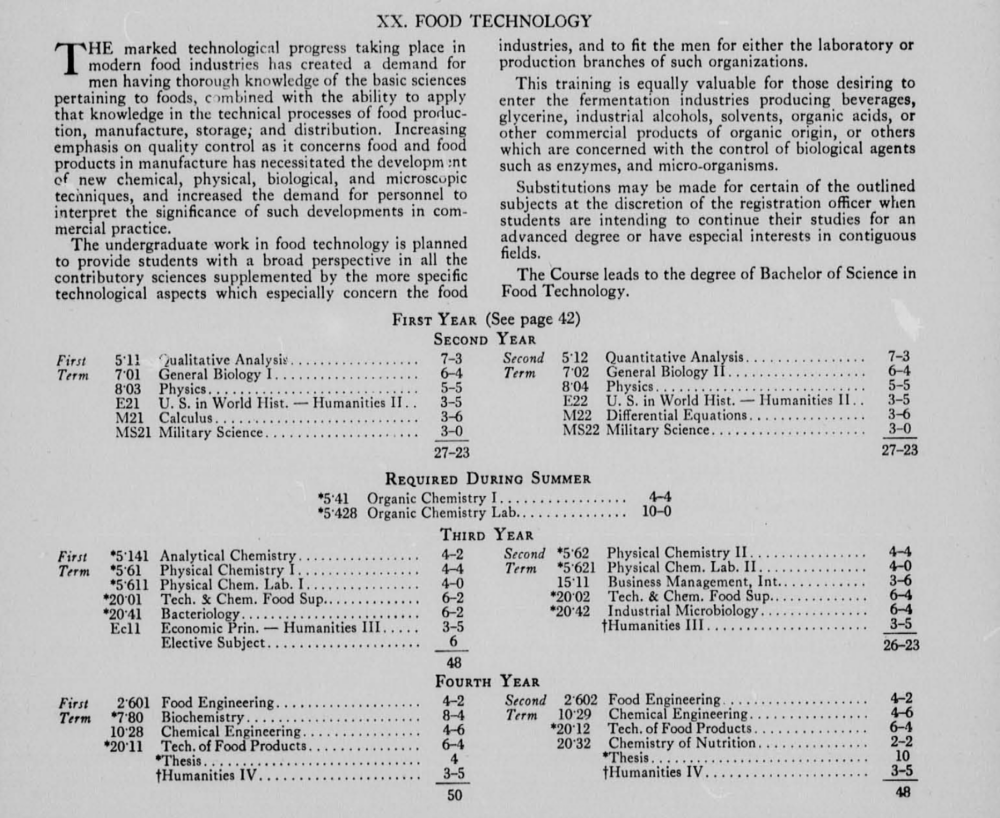
The explanation of, and degree requirements for, a Bachelor’s of Science in Food Technology in the 1945–1946 MIT Bulletin.
Reading through these original Course 20 program requirements made me wonder what an alternate universe03 Links provided to equivalents at MIT Prime, in this universe. might look like, one where MIT never abolished its Food Technology Program, which instead rose—like an overactive sourdough starter—to consume the entire Institute. As I cozied deeper into my beanbag among the banana leaves and cardboard boxes filled with fruit,04 Samuel Prescott would go on to study, catalog, and discover cures for fungal diseases afflicting banana plants, so the Banana Lounge owes much to his legacy. my eyelids grew heavy and my consciousness filled with delicious thoughts…
I still remember baking under the hot August sun the day I first stepped onto the Massachusetts Institute of Tasteology campus, where I Hunger To Feast Perpetually.05 IHTFP is a longstanding MIT acronym understood to have a dual meaning: simultaneously “I Hate This F–ing Place” and “I Have Truly Found Paradise.” The basic insight of this duality is that given the intensity of the challenges and the strength of the community at MIT, for many students, both are true at once. However, there are also many other meanings of IHTFP at MIT—the Institute Has The Finest Professors; the Institute of Hacks, TomFoolery, and Pranks; I Heart The Friendly Penguins—and it seems that in MIT AU, there are yet more.
Like all my classmates, I got a taste for MIT’s classes by enrolling in our foundational General Institute Recipes: 18.01 (Single Variable Cake-ulus), 8.01 (Crustical Mechanics), 7.012 (Introduction to Brioche-ology), and 3.091 (Introduction to Solid-State Crumbistry). After declaring Course 6-3, Compote Science and Engineering in my second year, I fed my interests through required coursework such as 6.1010 (Fun-dough-mentals of Programming), 6.390 (Introduction to Machine Kneading), and 6.1040 (Cake Design)—as well as electives like 18.200 (Principles of DisCrepe Mathematics), 2.00b (Tart Design), and 21M.011 (Introduction to Western Meringue).
After mulling over the many souperb residence options on campus, I’ve made a sweet home in Persimmons Hall, where the red-orange rising sun peeks over the Noodle House roof from across Eggs Field into my many windows. I spend most bright mornings with my amazing roommates: Anoushka, head of UA Sweetstain; Cyan, who’s part of Undergraduate Women in Fizz-ics; and Liong, who spends his free time at MIT Oat-ersports. In the shared kitchen, I Help To Fry Potatoes for breakfast.
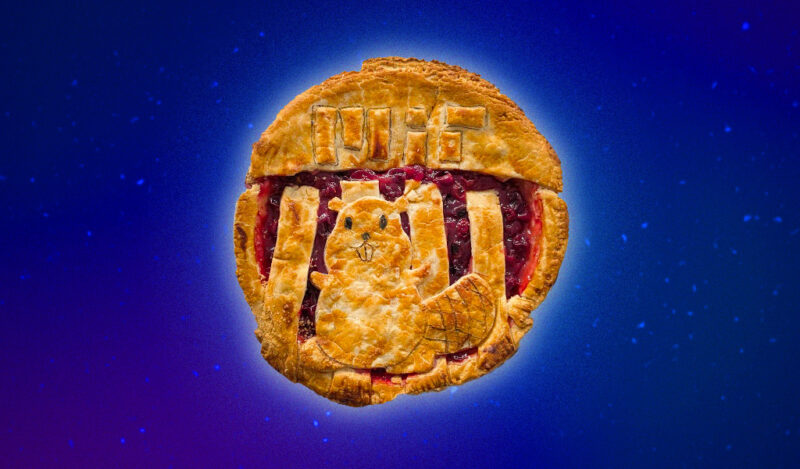
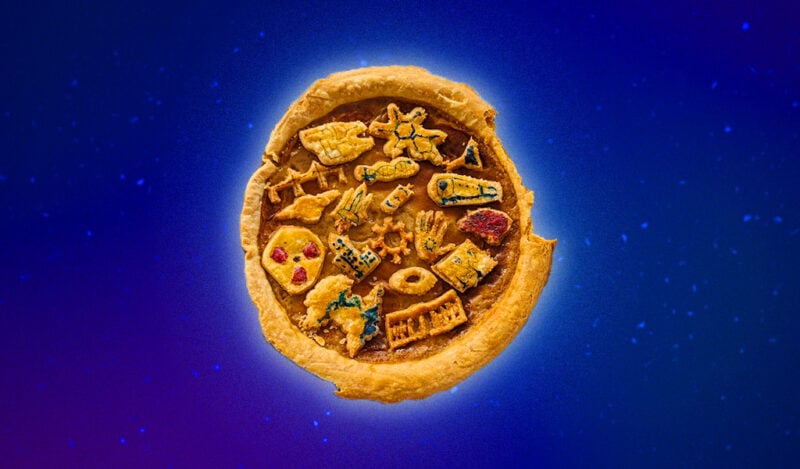
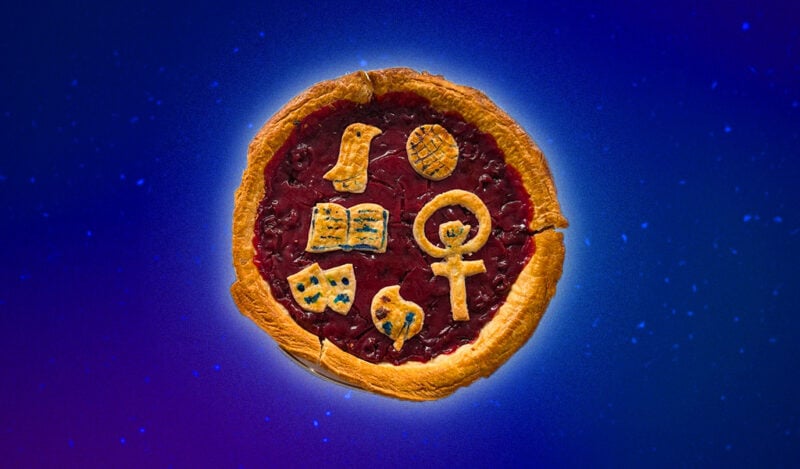

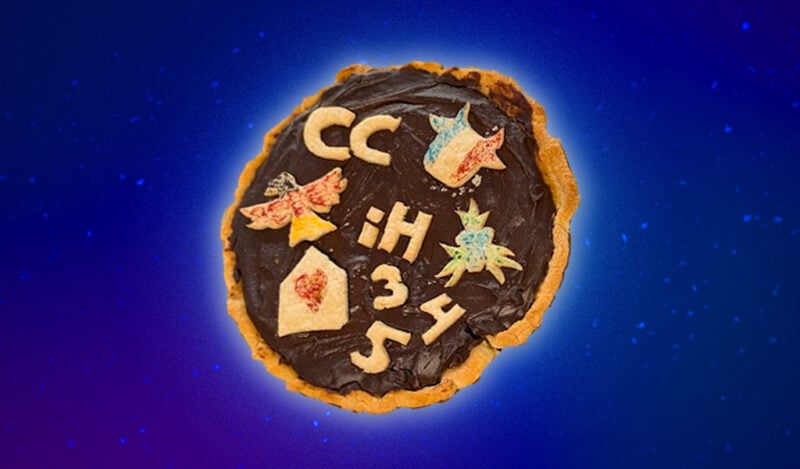
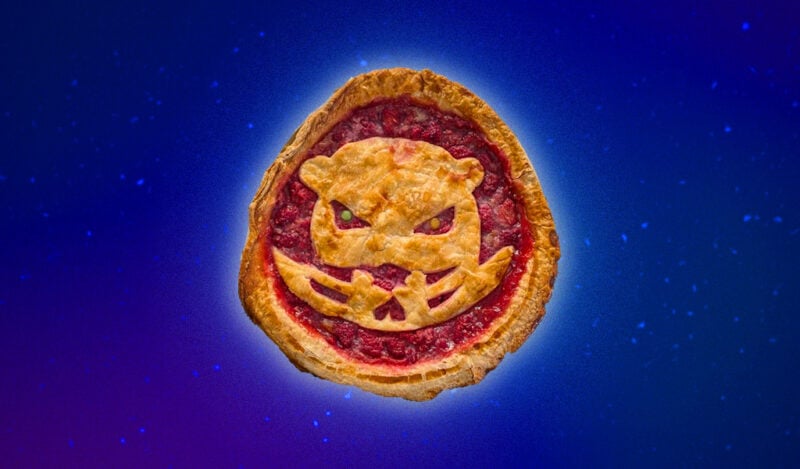
The gooey center of MIT’s academic year is Pie Day, where our scholarly and extracurricular aspirations blend and bind, and both the spirits and the stress of MIT students tend to rise. I’ve been here long enough to know that this duality is core to the MIT experience, and to power through the stickiest situations, I just need to remember that I Have Tremendous Food Passion.
So this year on Pie Day, I woke up early to pop over to Next Bake,06 This is an actual club at Next House in the MIT Prime Universe. which has some of the biggest and most well-stocked kitchens on campus. My friends had already warmed the ovens, and I quickly joined the crust-preparing assembly line. While I don’t live in Next, one thing I love about MIT is how easy it is to meet new people all across campus from taking classes and joining clubs. Before long, I stood surrounded by flour-dusted friends like Ali (President of Next Bake), Nasya (representing the Anko Dance Team), Allison E. (who helps run MIT Science Doughlympiad), and Charlie (my classmate in 16.01: Unified Egg-gineering) for about two weeks—before I dropped it to save myself), and with their help I Hydrated The Flour Particles.
Over the next few hours, the air filled with the sound of oven timers going off and cheers of delight over each new pie. At some point, our neighbors from Ramen Hall joined us, intent on making a curious concoction that they would only call a “milk pie.” For some reason, their baking process involved continuously chanting “finish filling crust with milk” like a strange mournful dirge. The milk pie spilled a little on its way into the oven, but thankfully it didn’t ruin the latest issue of The Peck, our campus newspaper. Meanwhile, members of the Vegetable Garden Orchestra showed up to provide some musical motivation, like the classic tune, “I Hear The Frying Pans.”
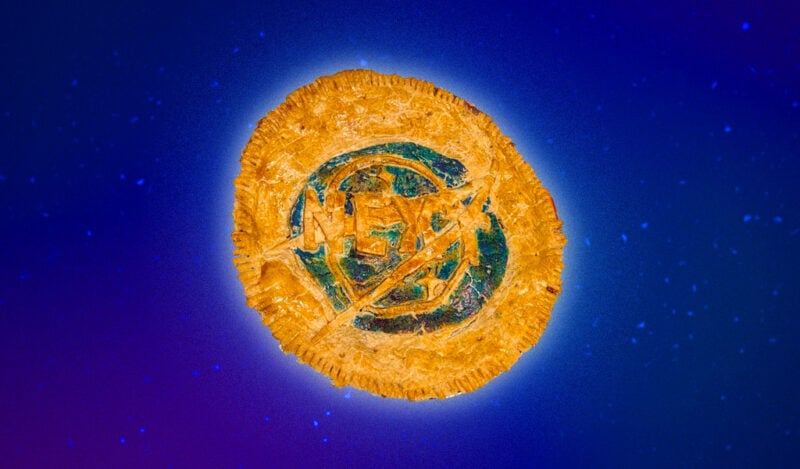
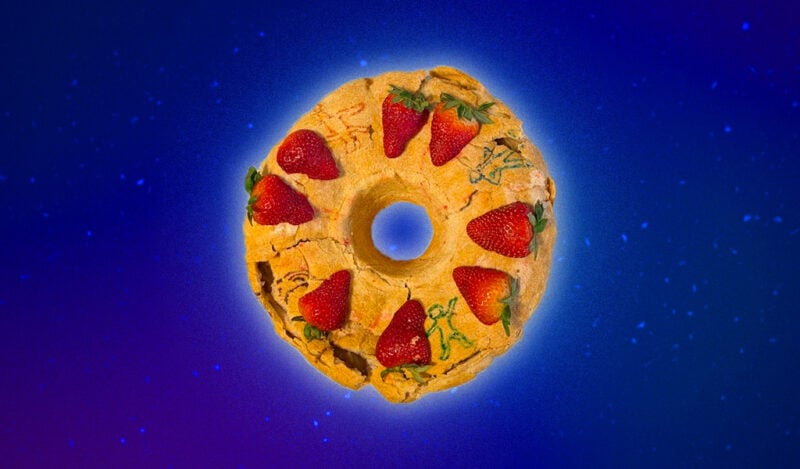
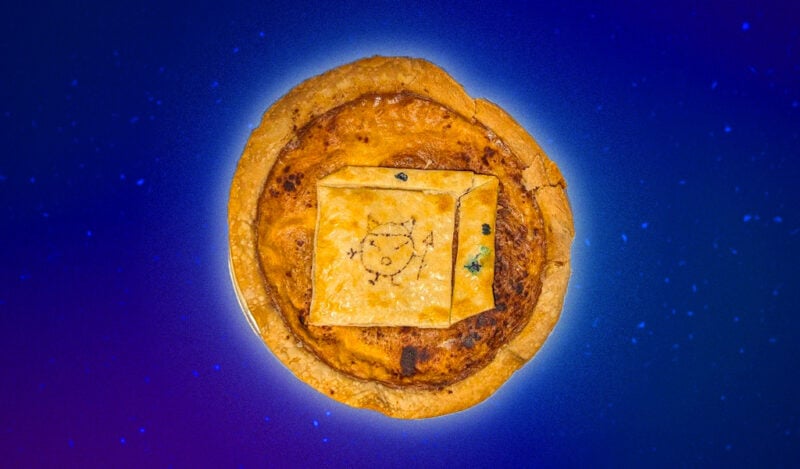
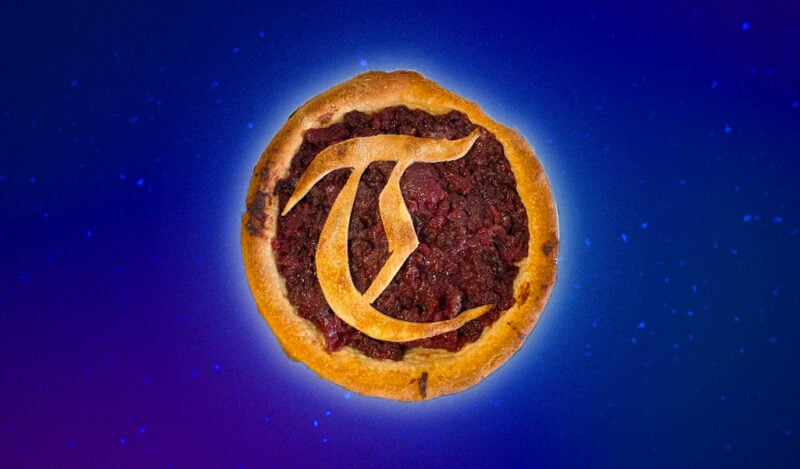
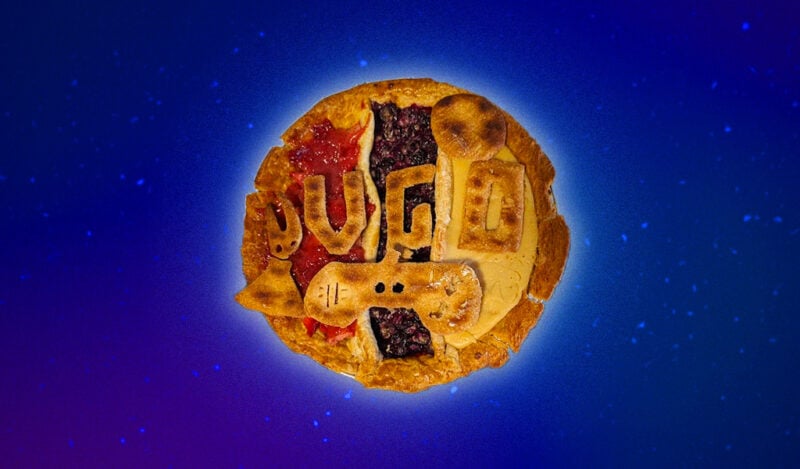
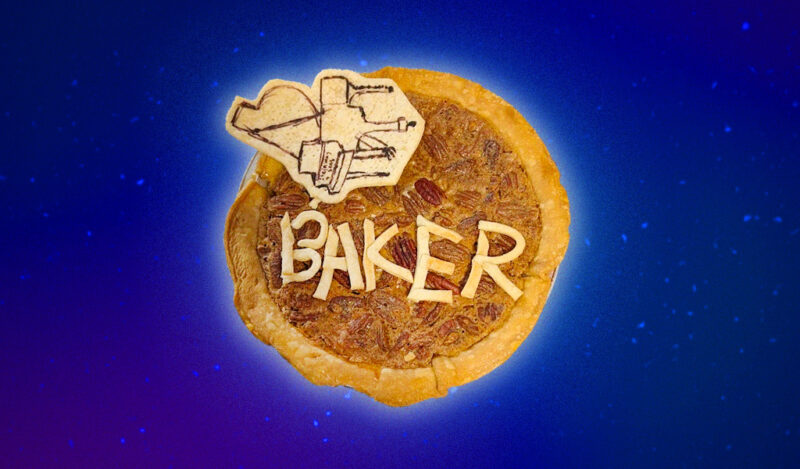
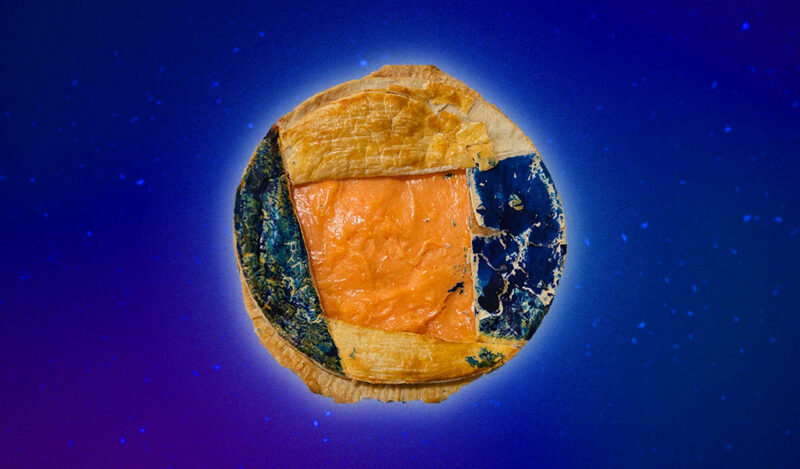
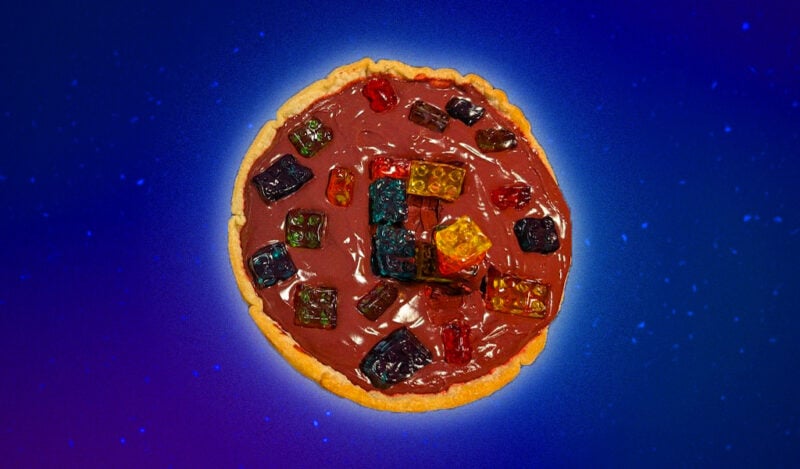
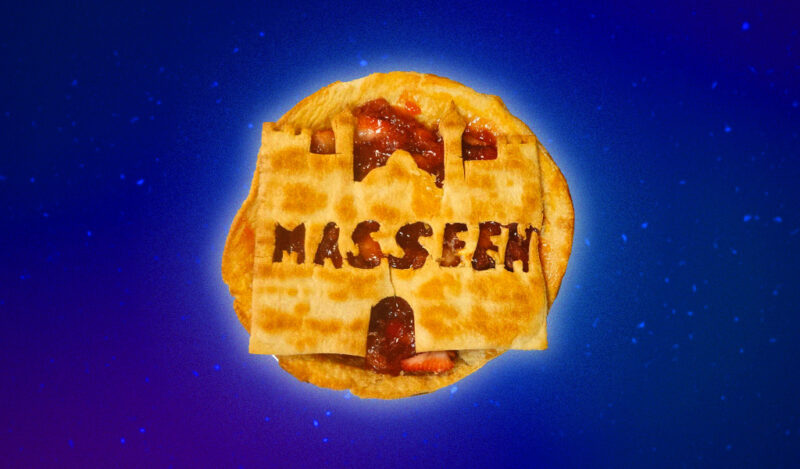
After rolling out my share of crusts, I wandered toward other residence halls to see how my classmates were celebrating Pie Day. At Baker House,07 ... the same name as in the MIT Prime Universe, apparently. they honored their piano drop in an edible homage, while Nougat Vassar represented their striking orange-and-blue facade with an apricot custard filling and cyan dye. MacGriddle House replicated their distinctive architecture with brick gummies, while Miso Hall outlined a castle in their crust. Burton Cobbler House had sections for each of their nine living groups, while McCormick Hall08 ... also the same, apparently. —arguably the spiciest hall on campus, and from whose dining hall I Hoard Tasty Food Packets—went (predictably) with pumpkin spice.
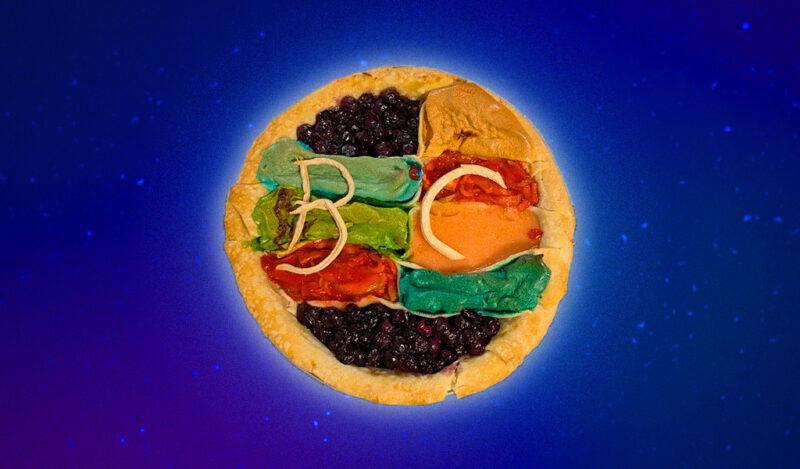
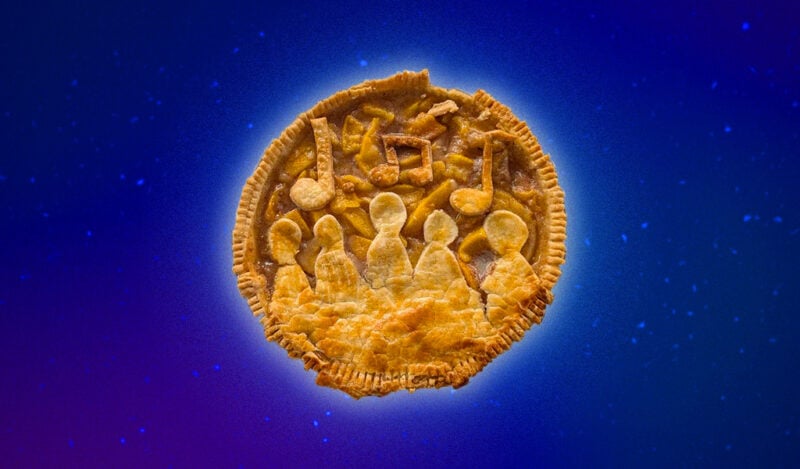
Across the river, the Fried Snacks In Large Groups (FSILGs) collectively concocted a peach cobbler topped with symbols of their favorite snacks. On my way back, I ran into Riya, Isabelle, Jordyn, and Vinson (two of whom were busy crocheting noodles), and they brought me to Yeast Campus. Always rising to the occasion, they stunned me with their spicy rainbow lemon meringue pie, a whimsical representation of their colorful culture. Though Persimmons Hall is a trek from Yeast Campus, I often find myself there late at night, where in its vibrant cook-for-yourself kitchens I Heartily Taste Fine Pesto.
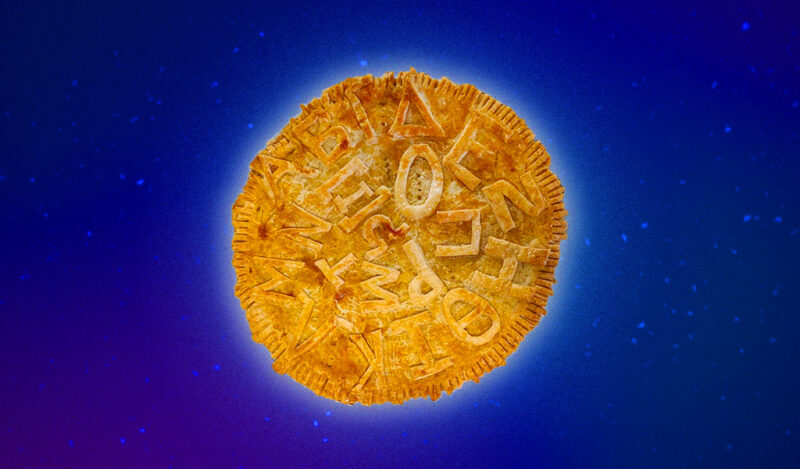
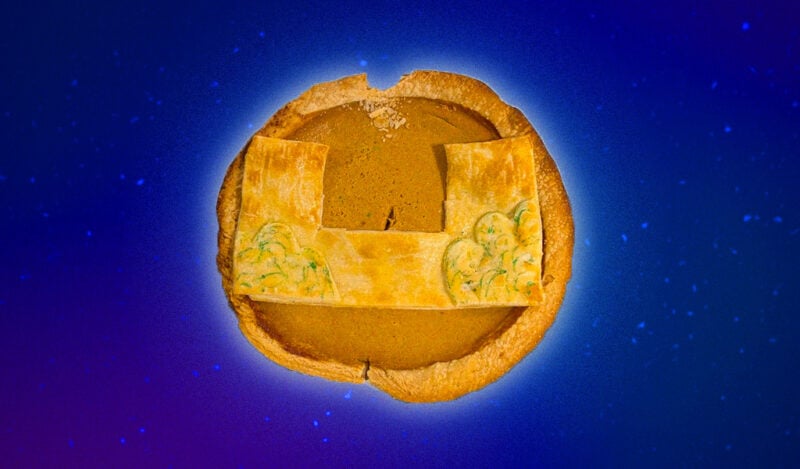
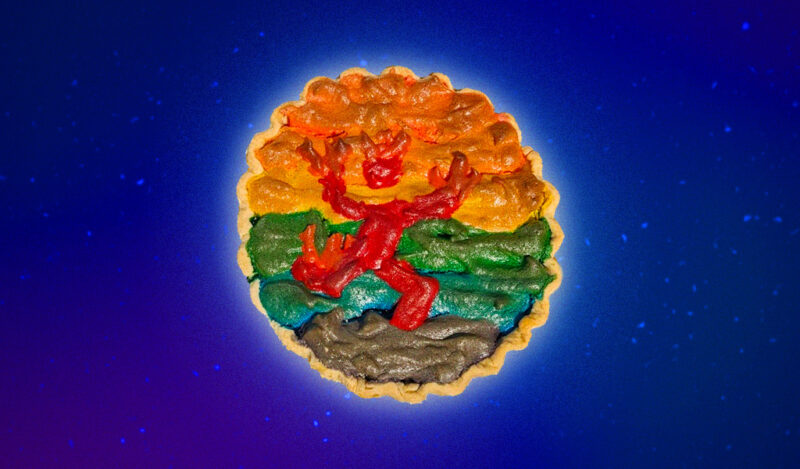
Leaving Yeast Campus, I turned back towards the Strudel Center, narrowly dodging a pumpkin pie dropped from the top of the Green Building. The Strudel Center is home to many student groups, so I was treated to an artistic appetizer by the Butterline Mural team, the sturdy textured bezel of the Bran Rat, a savory soufflé from MIT Mole-iachi, a puzzling puff from MIT Pastry Hunt, a cosmopolitan creation from MIT MISTI (Moist Interior, Sugared Top; Incredible!), and a sweet-signaled scone from WMBR (Whisk, Mix, Bake, Rise).
The MIT Bakerspace folks showed up with something they called a pie… I think they might have misunderstood the assignment, but everyone ooh’d appropriately and appreciated their contribution—especially since Perry used up his 3Deli printing filament for the occasion. Even the beloved local MBTA (Massachusetts Baking Tray Authority) got in on the action with a key lime ode to the Green Line, over which I Habitually Take Fresh Produce from Haymarket back to Persimmons on weekends.
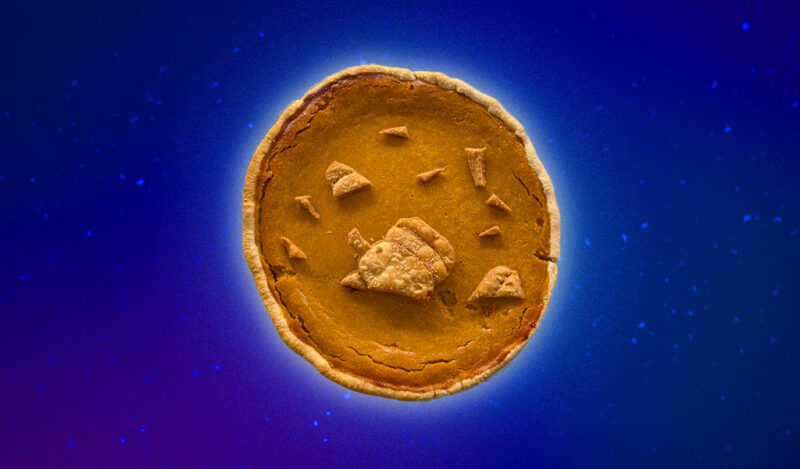
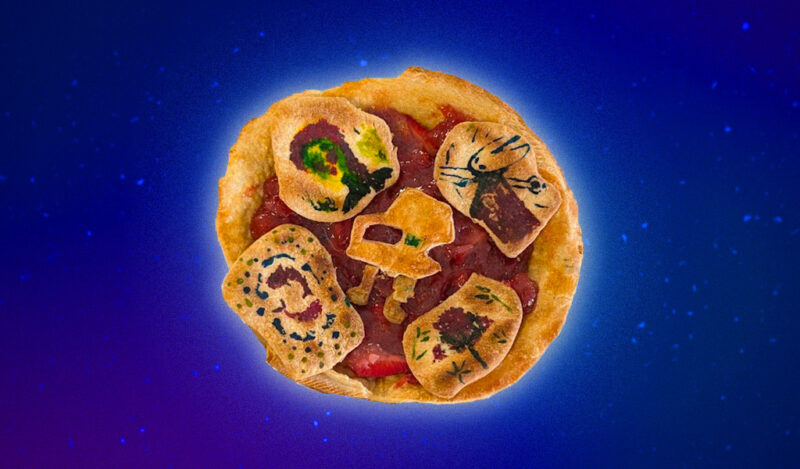
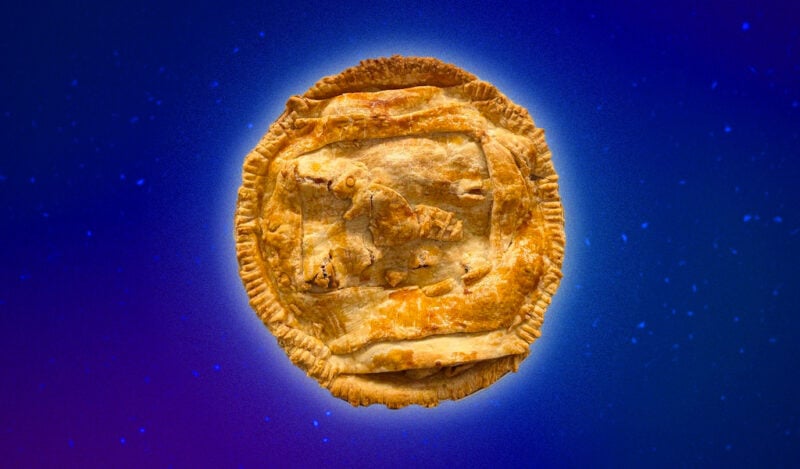
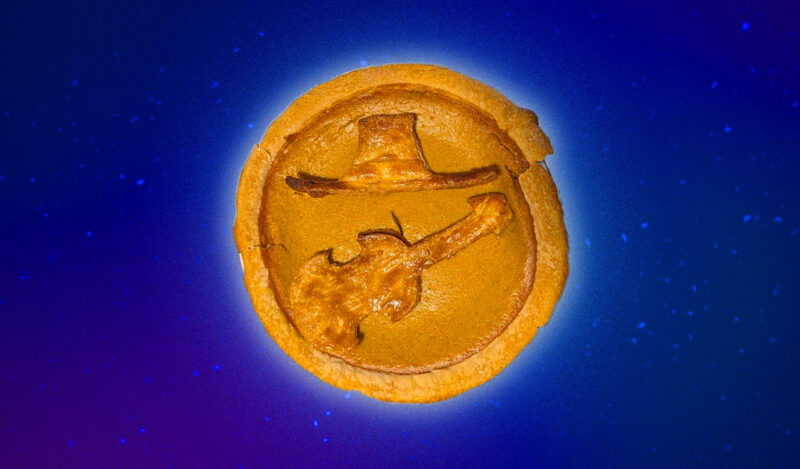
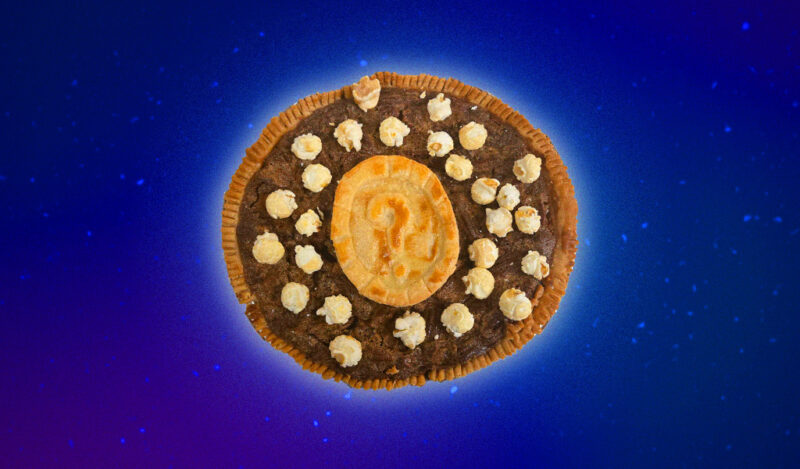
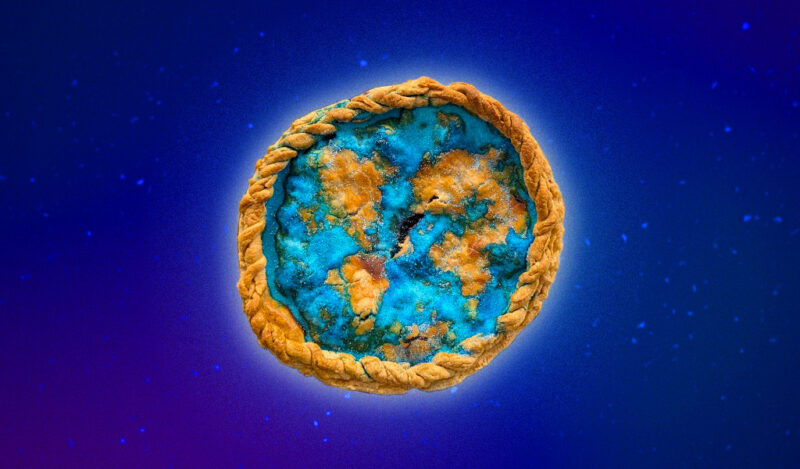
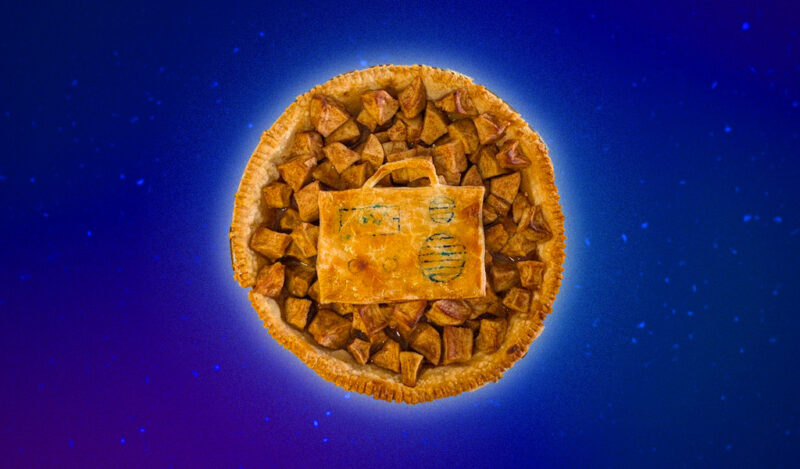
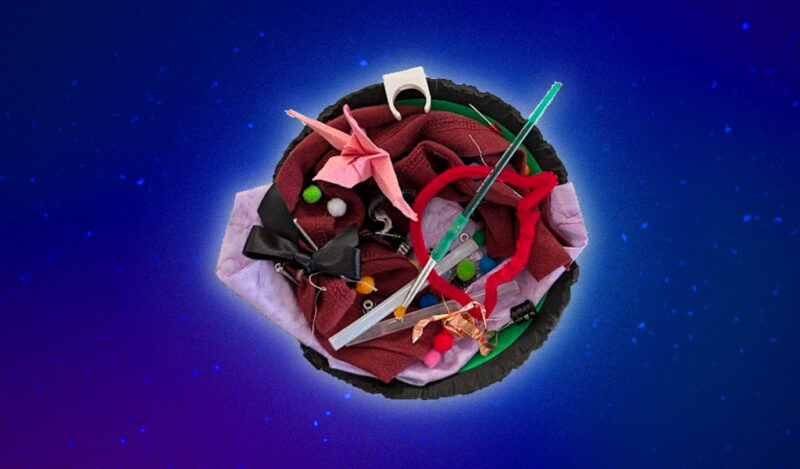
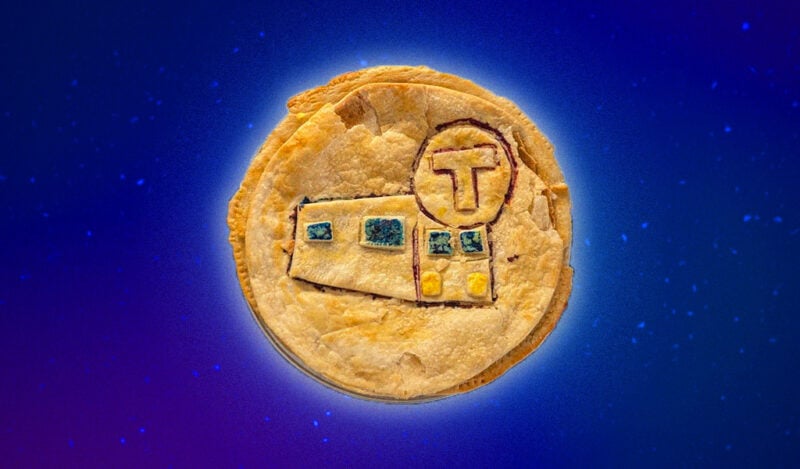
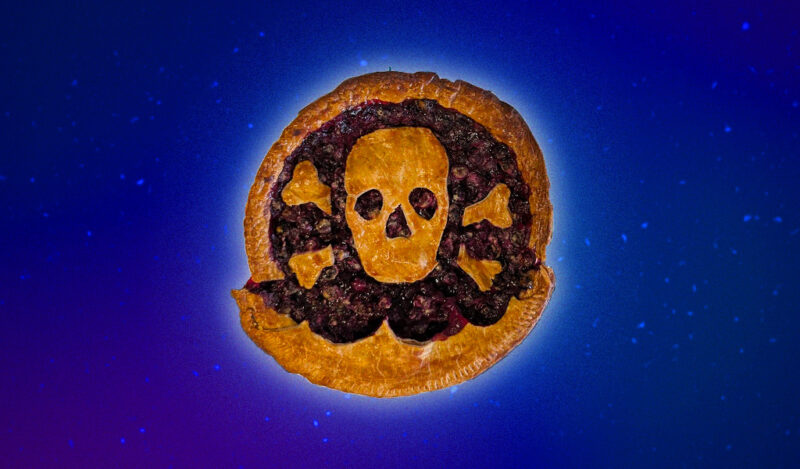
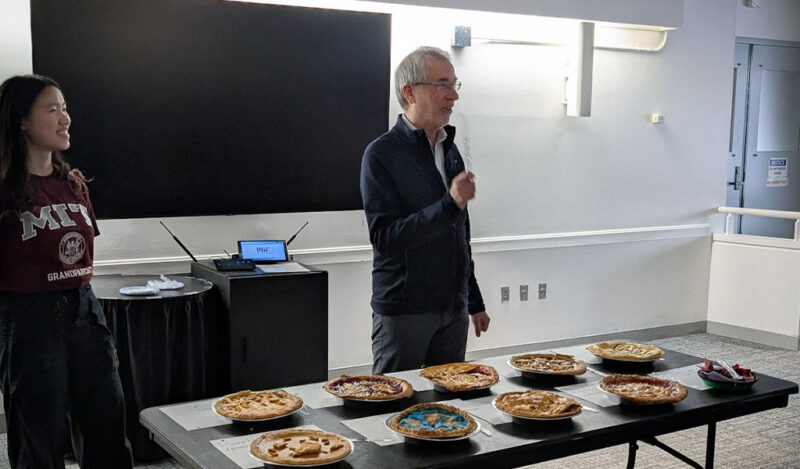
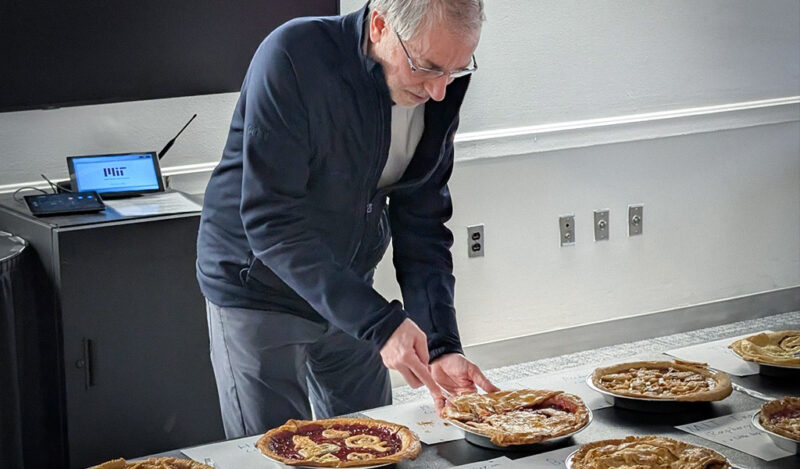
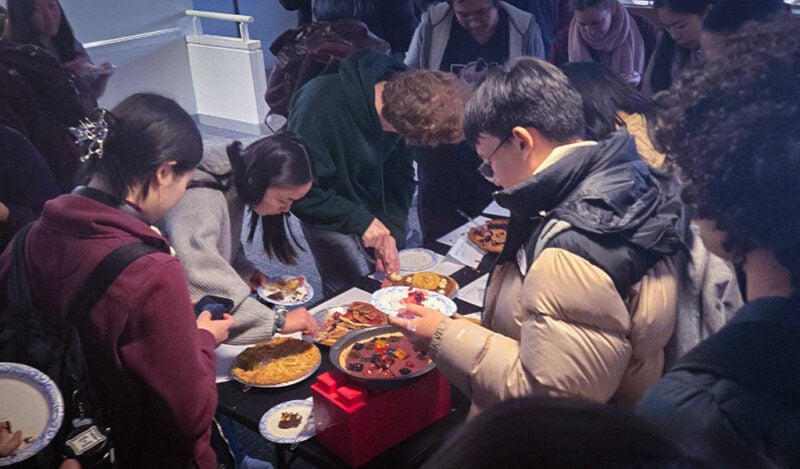
In total, I counted thirty pies across campus, a perfect number to celebrate the soon-to-be-admitted Class of 2030. As the sun began to set, bakers and makers alike brought their pies to the Strudel Center. As the crowd grew, I chatted with Allison H. about her work with CocoaSci, got updates about DormCod from Eugenie, and learned about MIT Microbiomelet with Selena. Soon, we were joined by Stu Schmill ’86, the Dean of Admi-scones, whose team reads the thousands of apple-cations to MIT every year. I remember what it was like to wait for Pie Day myself, anxiously thinking: “I Hope They Finish Promptly.”
Stu thanked us for our hard work, cheerfully awarded us our Pie-rate’s Licenses, and then ceremoniously read out every name of the newly admitted Class of 203009 But I’ve strangely forgotten them... as we applauded wildly. Finally, it was time to devour our pies in sweet satisfaction, accompanied by the smooth tunes of the Loaf-arythyms, MIT’s oldest a cappella group.
With that, Pie Day 2026 had come to an end. Filled with pie and cheer, I went to bed, knowing that the very next day my friends and I would start planning for the next big campus event (Confectionary Preview Weekend) where, if all goes well, our newly admitted students will be able to say, “I Have Tasted Future Potential.” The community here truly makes MIT special: all these different ingredients mixing and melding into a treat greater than the sum of its parts. We can’t wait to see what the MIT Class of 2030 will cook up when you get here.
MIT Regular Action decisions will be available online on Saturday, March 14 at 1:59 PM ET in the year ’26.
To check your decision, visit apply.mitadmissions.org/apply and go to your Application Status Page. That’s where you’ve been able to track your application checklist, which will now be turned off. We recommend that you try logging in now to make sure it goes smoothly!
If you need to reset your password, just go to apply.mitadmissions.org/apply, click the Login link, then click “Forgot Your Password?” and follow the instructions. If you still need help after that, feel free to email [email protected] and someone from the MIT Admissions team will get back to you.
In the meantime, you can bake a pie, eat a pie, witness previous Pi Days at MIT, learn how to make a 100% apple pie, or see the creation of the world’s purest cookie.
Credits:
Next Bake (15 Pies!!!): Ali P. (President), Daina A., Nick S., Charlie B., Coleman D., Lila S., Thomas C., Nico S., and Dominic P.
EC Stickman: Riya S., Jordyn G., Celestina P., Vinson H., and Isabelle C.
Assorted Awesome Bakers: Eugenie C., Andrew W., Cyan C., Anoushka T., Allison H., Liong M., Andy T., Grace Z., Vivian H., Samuel X., Allison E., Selena Y., Nasya C., and Perry H. (3D Printing Extraordinaire).
Elders: Sam X., Ceri R., Jenny B., and Petey.
- Prescott eventually became the founding Dean of the School of Science at MIT and founding President of the Institute of Food Technologies; Underwood volunteered (without pay) on food safety research at MIT for the rest of his life. Around the same time, John Dorrance ’95 invented condensed soup, and later became President of Campbell’s Soup Company. back to text ↑
- While today no programs in food-related matters are offered at MIT, the Institute’s extensive contributions to food systems, science, and technology are recounted in “Of Microbes and Molecules: Food Technology, Nutrition, and Applied Biology at M.I.T., 1873–1988” by the late Professor Samuel Goldblith. back to text ↑
- Links provided to equivalents at MIT Prime, in this universe. back to text ↑
- Samuel Prescott would go on to study, catalog, and discover cures for fungal diseases afflicting banana plants, so the Banana Lounge owes much to his legacy. back to text ↑
- IHTFP is a longstanding MIT acronym understood to have a dual meaning: simultaneously “I Hate This F–ing Place” and “I Have Truly Found Paradise.” The basic insight of this duality is that given the intensity of the challenges and the strength of the community at MIT, for many students, both are true at once. However, there are also many other meanings of IHTFP at MIT—the Institute Has The Finest Professors; the Institute of Hacks, TomFoolery, and Pranks; I Heart The Friendly Penguins—and it seems that in MIT AU, there are yet more. back to text ↑
- This is an actual club at Next House in the MIT Prime Universe. back to text ↑
- ... the same name as in the MIT Prime Universe, apparently. back to text ↑
- ... also the same, apparently. back to text ↑
- But I’ve strangely forgotten them... back to text ↑