
US News & World Report… Just Save Your Wrist Watch. by Bryan G. Nance
If I were to create a minority-based ranking of colleges, here are some of the questions that I'd ask...
My grandfather was from Milledgeville, Georgia. He was a simple man who was known for his crazy sayings and no nonsense demeanor. He had little patience or tolerance for anything that wasted his time. 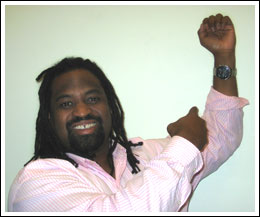 Whenever he got tired of listening to us complain about a particular topic, he’d simply raise his left arm high over his head and point to his watch with the index finger of his right hand. All 17 of his grandkids knew what this meant: “I’m already up to my neck in BS, I just want to save my wrist watch.”
This week that Juggernaut known as US News & World Report (USNWR) released its rankings and MIT fell to the number 7 slot, tied with CalTech. I’m not going to bother complaining about the well-known problems associated with the USNWR rankings; my fellow blogger and colleague Ben Jones did a terrific job handling my light work. Instead, let’s spend this time examining the lesser-discussed problems of these surveys; how these surveys fail to address criteria important to underrepresented students searching for colleges.
Should there be rankings? ABSOLUTELY! If I were to create a minority-based ranking of colleges, here are some of the questions that I’d ask:
- How diverse is a campus?
- What is the climate on campus?
- What support systems exist on campus for minority students?
- How effective are these systems?
- How is success measured?
- Can minority students easily and comfortably participate in minority and majority activities?
- Are there minority organizations designed to foster professional development and mentorship?
- What are the graduation and retention rates for minority students, as compared to majority students?
- What is done to assist with social and cultural adjustments to campus? (Can I get my dreads done? Can I get ethnic food? Is there a decent radio station?)
- How do minority students relax?
- Will I be accepted if none of my clothes are from Abercrombie & Fitch?
I’m willing to bet that not one of my questions is considered in the USNWR rankings. For that matter, you might not even be interested in the answers to some of them. That’s okay – they’re my questions. I guess what I’m trying to say here is: create your own rankings based on your criteria of what’s important in a college. This whole process is about you picking the best college for you.
For many of you I know your first instinct will be to take my list, and fire back all those questions to me about MIT. Instead, I hope that you will bypass me and go straight to the sources. Find the experts – the primary sources, the students and student groups/organizations. Your peers will always let you know who’s grimy and what programs are trife.
You’ve heard enough from me… What do you think? Is my list tight? What would you add or subtract? (I need to end this because I’ve used all of urban vernacular (slang) that I know!)
You look like a dork in the pictures! But regarding those rankings….it is SO subjective to judge a school, as it is to judge a STUDENT. I think it is unfair, biased and doesn’t really say ALL THAT MUCH. To generalize is like communism…and we all know how THAT went well for the USSR. Do I sound too bitter? Anywho, nice blogging!! You can be hip like us….generation X-ers….(or are we some other letter generation?)
cool pic. on Matt’s blog you don’t have so long hair. yeah and it is ….(i can’t give it by words) that MIT is the 7th(dishonest decision.)
Yeah, that ranking does seem weird doesn’t it? I’ve pretty much given up trying to track those rankings, seeing as 1) they don’t tell me much about the college, and 2) how the heck does USNWR come up with those rankings in the first place anyway? So after having my mom pile rankings on me this summer, I come to this very important conclusion: Rankings are very subjective!
It is good to so many interesting comments about this topic. (Except for YeSeul’s…silly maybe but never a dork
No one knows how USNWR compiles their lists as it’s a better kept secret that the formula for Coke-A-Cola! Not even the reporters from USNWR are allowed to know the methodology. As Mr. T would say, “I pity the fool that uses someone elses ranking system to choose the right college!”
You have to remember that USNWR are also the guys that give significant point value to “Peer Assessment.”
:/. Now that’s not subjective at all.
I prefer to look at actual numbers (http://web.mit.edu/newsoffice/1997/43371.html) myself. It’s not really difficult to see what the #1 school in the world is.
– Timur
I wonder what the school two miles down Mass Ave (Harvard) is saying about USNWR. I’m sure that you guys would respect USNWR if MIT had been ranked 1st.
Quote:
“Whenever he got tired of listening to us complain about a particular topic, he’d simply raise his left arm high over his head and point to his watch with the index finger of his right hand. All 17 of his grandkids knew what this meant: ‘I’m already up to my neck in BS, I just want to save my wrist watch.’ “
Greatest. Line. Ever. The picture was good; it helped to explain what your grandfather meant.
On a more serious note, I think you’re making a good point about the survey methodology used. There are factors, as irrelevant as they initially appear (e.g. not having Abercrombie & Fitch clothing), that are arguably just as important as the “standard” factors in college rankings.